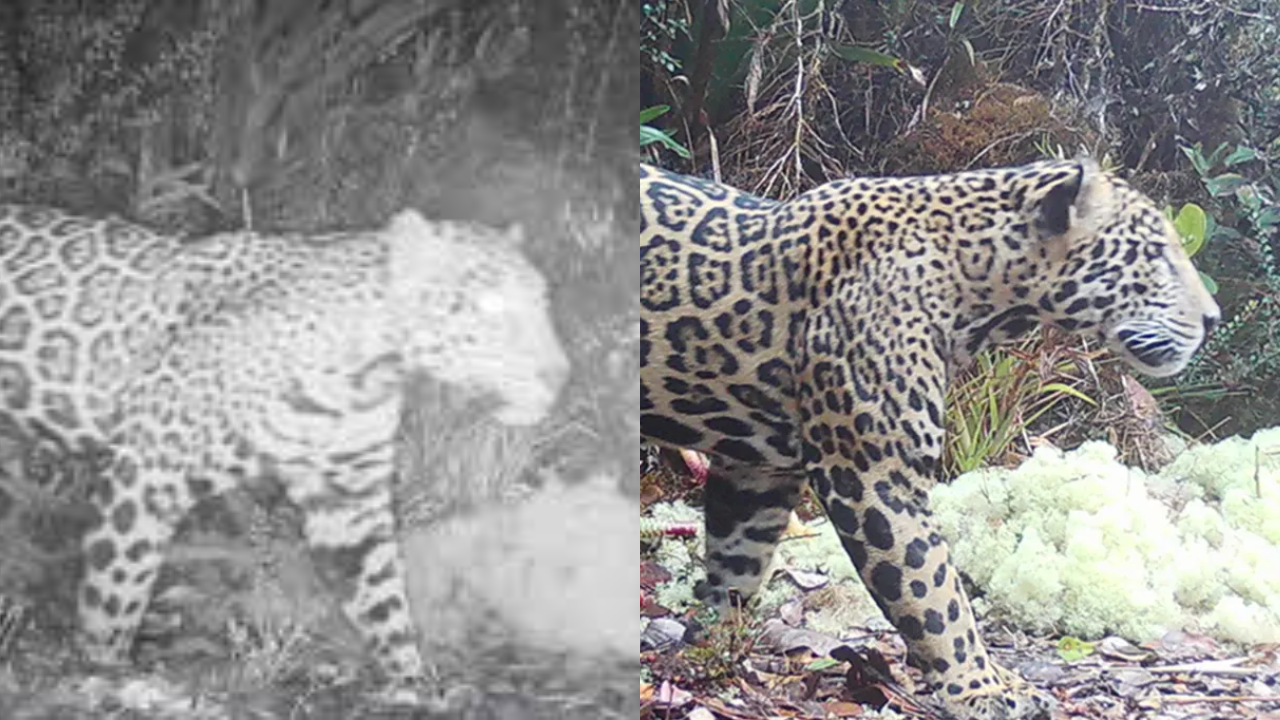
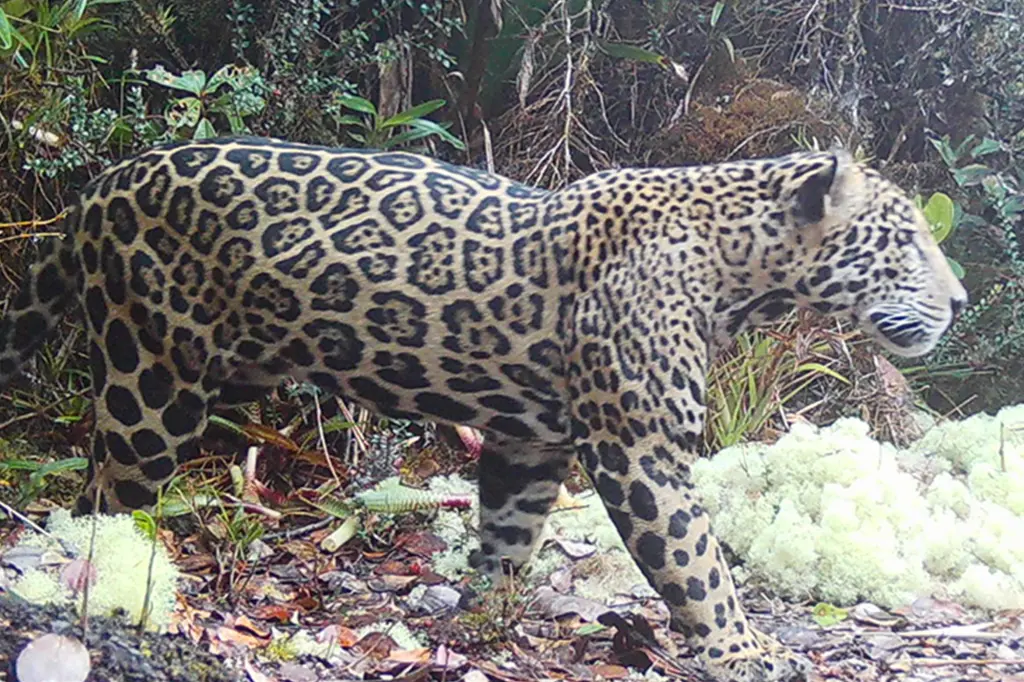
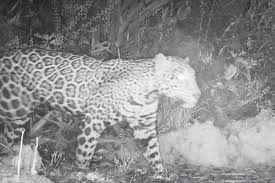
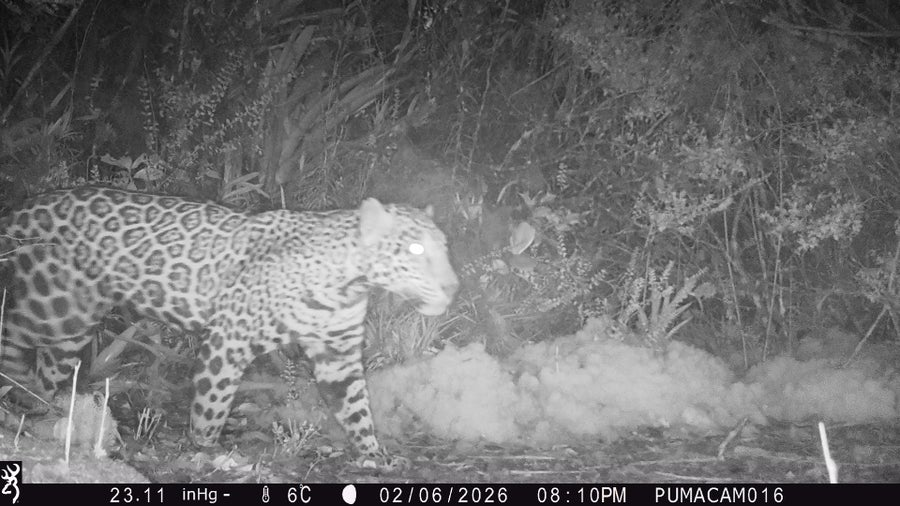
A legendary, ultra-rare jaguar known as the “cloud jaguar” – a high-altitude subspecies so elusive it borders on myth – has been captured on camera trap for the first time in a decade, prowling the fabled Sierra del Merendón mountain range in Honduras. The sighting is being hailed as a major victory for conservationists who have spent years rebuilding an ecosystem ravaged by deforestation and poaching.
The lone young male was caught on film on February 6, 2026, according to Panthera, a global wild cat conservation organization. The images mark the first confirmed sighting in the mountain range in 10 years, offering a rare glimpse of an animal that many locals had begun to believe had vanished forever.
“It seems we are seeing a recovery in large cats in general,” Panthera Director Franklin Castañeda, who captured the images, told CNN.
The Cloud Jaguar: A Ghost of the Highlands
The “cloud jaguar” is not a distinct species but a population of jaguars ( Panthera onca ) that has adapted to life in cloud forests – high-altitude, mist-shrouded ecosystems found in the mountains of Central and South America. These jaguars are typically smaller and have thicker, darker coats than their lowland relatives, an adaptation to the cooler, wetter environment.
Because they live in remote, difficult-to-access terrain, cloud jaguars are rarely seen. Before this sighting, the last confirmed photographic evidence from the Sierra del Merendón was in 2016. The new image is a powerful testament to the resilience of both the species and the ecosystem.
The Sierra del Merendón is a rugged, biodiverse mountain range that straddles the border between Honduras and Guatemala. It is part of the Mesoamerican Biological Corridor, a critical pathway for wildlife moving between North and South America.
A Conservation Comeback: From Deforestation to Recovery
The sighting is not an isolated event. It is the result of years of painstaking work by Panthera, local communities, and the Honduran government.
Honduras has lost nearly 20% of its tree cover – about 3.7 million acres, roughly the size of Connecticut – between 2001 and 2024, driven largely by agriculture and grazing land. Jaguars have lost nearly half their historic range across the Americas, with poaching and habitat destruction pushing them into ever-smaller pockets of wilderness.
But the tide may be turning. Panthera has been working to:
- Increase ranger patrols to deter poachers
- Install hidden acoustic monitors and camera trap networks
- Reintroduce prey species such as deer and peccaries that had been stripped from the landscape
- Engage local communities in conservation efforts
The results are measurable. Pumas were detected in the range for the first time after nearly 20 years in 2021. Ocelots, jaguarundis, and margays have since been documented as well. With the cloud jaguar’s recent sighting, the Merendón now hosts all five wild cat species known to exist in Honduras.
“Deforestation and poaching are the biggest threats, and we have been working to tackle both,” Castañeda told CNN. “Poaching is down, and now the cats are coming back.”
Government Action: Zero Deforestation Plan 2029
The Honduran government has thrown its weight behind the effort. Under its Zero Deforestation Plan 2029, the government has deployed 8,000 military troops to crack down on illegal logging and agricultural encroachment. It has also committed to restoring over 3.2 million acres of forest by the end of the decade.
The plan has not been without controversy. Some environmental groups have raised concerns about the use of military force against local farmers and indigenous communities. However, government officials argue that the scale of deforestation requires aggressive action.
The cloud jaguar sighting provides a powerful symbolic victory for the plan, suggesting that conservation efforts are beginning to bear fruit.
Connectivity Is King: The Challenge Ahead
Despite the good news, experts caution that the cloud jaguar is unlikely to stay in the Merendón for long. Castañeda said the big cat was likely passing through Honduras and Guatemala on the hunt for females.
Honduras’ jaguar population remains razor thin:
| Location | Estimated Jaguar Population |
|---|---|
| Jeannette Kawas National Park | 10–18 |
| Pico Bonito National Park | 20–50 |
| Sierra del Merendón (transient) | Unknown |
For the species to survive long-term, jaguars need to be able to move freely between these fragmented habitats. That requires maintaining and restoring wildlife corridors – strips of forest that connect protected areas.
“Connectivity is king for the future of the jaguar,” said Dr. Allison Devlin, Panthera’s jaguar program director. “If they cannot move between territories to find mates and new hunting grounds, isolated populations will eventually collapse.”
The Merendón range sits at a critical junction. It links the cloud forests of Honduras with the Maya Biosphere Reserve in Guatemala and the Lacandon Jungle in Mexico. Protecting this corridor is essential for the long-term survival of jaguars in Central America.
A Symbol of Hope
The cloud jaguar’s reappearance is more than just a rare photograph. It is a sign that conservation works – even in one of the most threatened ecosystems on Earth.
For the people of Honduras, the jaguar holds deep cultural significance. Ancient Mayan and other indigenous cultures revered the jaguar as a symbol of power, the underworld, and the night sky. Its return is seen by many as an auspicious omen.
“The jaguar is a guardian of the forest,” said a local community leader who spoke on condition of anonymity. “When the jaguar is healthy, the forest is healthy. We are all connected.”
What Happens Next
- Continued monitoring: Panthera will maintain its camera trap network to track the jaguar’s movements and to document other wildlife.
- Corridor protection: Conservationists will push for stronger legal protections for wildlife corridors between Honduras, Guatemala, and Mexico.
- Community engagement: Efforts to involve local communities in anti-poaching and reforestation will continue.
- Funding needs: International donors may increase support for the Zero Deforestation Plan and Panthera’s programs.
FAQ: Cloud Jaguar Sighting
Q: What is a cloud jaguar?
A: A population of jaguars adapted to high-altitude cloud forests. They are smaller and have darker, thicker coats than lowland jaguars.
Q: Where was it spotted?
A: In the Sierra del Merendón mountain range in Honduras, near the border with Guatemala.
Q: When was the last sighting?
A: The last confirmed photographic evidence in the range was in 2016 – 10 years before this sighting.
Q: Why is this important?
A: It shows that conservation efforts – including anti-poaching patrols, prey reintroduction, and reforestation – are working. It is the first time all five of Honduras’ wild cat species have been documented in the same range.
Q: Is the jaguar endangered?
A: Jaguars are listed as “Near Threatened” globally by the IUCN, but their populations are fragmented and declining in many regions. In Honduras, they are critically endangered, with fewer than 100 individuals estimated in the entire country.
Q: How can I help?
A: Support organizations like Panthera, the Wildlife Conservation Society, and local Honduran conservation groups.