
Table of Contents
Introduction: The Messages That Haunt a Nation
The Lindsay Clancy haunting messages have become some of the most devastating evidence in what many are calling “America’s saddest murder trial”. In the weeks before she strangled her three young children with exercise bands in the basement of her Duxbury, Massachusetts home, the former labor-and-delivery nurse sent a series of chilling communications to her psychiatric nurse practitioner.
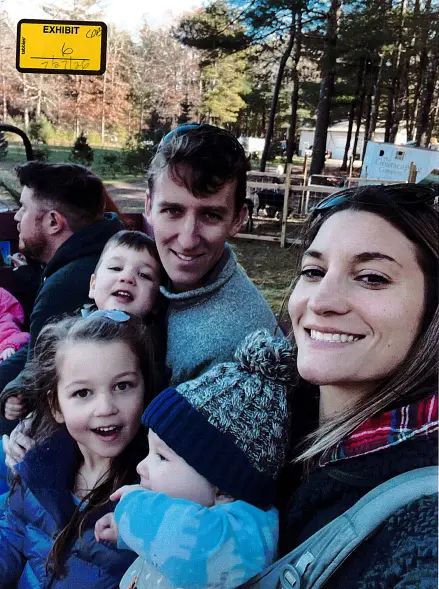
“I feel like I’m going to die and I don’t care,” Clancy wrote on December 2, 2022. Just over a month later, on January 24, 2023, she killed 5-year-old Cora, 3-year-old Dawson, and 8-month-old Callan before attempting to take her own life by slitting her wrists and throat and jumping from a second-story window. The fall left her paralyzed from the waist down.
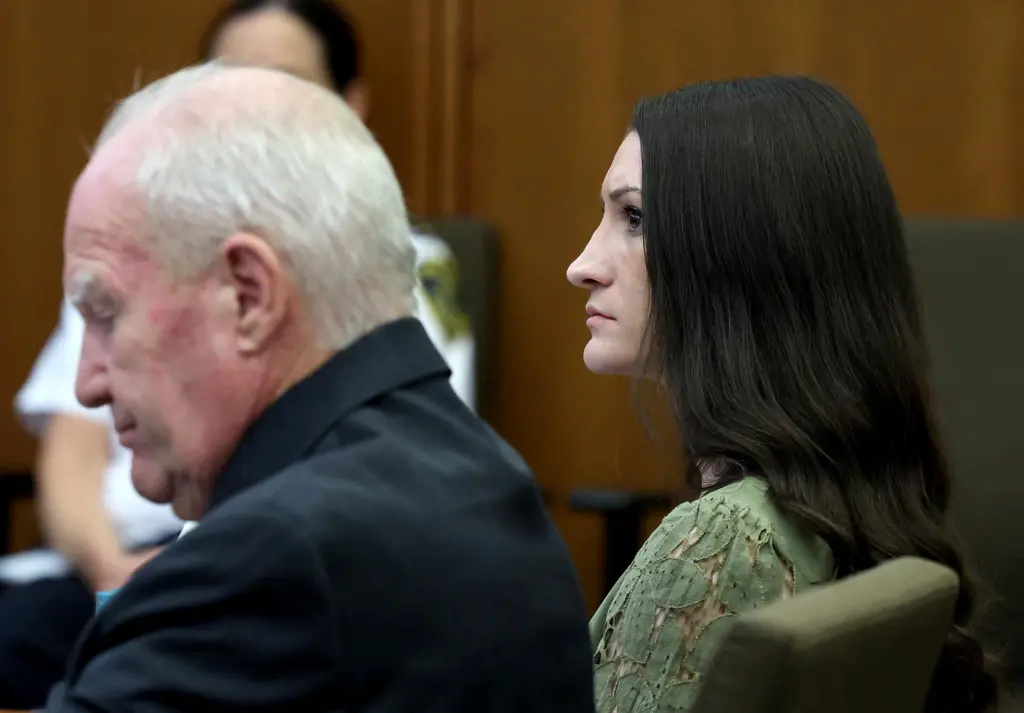
The trial, now in its third week in Plymouth Superior Court, has placed postpartum mental health under intense scrutiny. Clancy, now 36, has pleaded not guilty to three counts of first-degree murder, asserting an insanity defense based on claims she was suffering from postpartum psychosis. She does not deny killing her children, but her defense argues that severe mental illness warped her sense of reality and that she is not criminally responsible for their deaths.
The MyChart Messages: “I Feel Like I’m Going to Die and I Don’t Care”
The Lindsay Clancy haunting messages were sent through MyChart, a patient portal used by South Shore Health, where Clancy was receiving treatment at the Perinatal Behavioral Health Program. The messages paint a portrait of a woman spiraling into despair while desperately seeking help.
On November 30, 2022—just one day after beginning treatment with nurse practitioner Rebecca Jollotta—Clancy wrote: “What I’m really feeling is I cannot go on this way“. Later that day, she asked if Jollotta could call her. The nurse practitioner testified that she was too busy seeing other patients and had a more junior staff member call instead.
By December 2, the messages had grown more urgent and disturbing. Clancy wrote about taking the antidepressant Remeron for insomnia:
“I woke up at 12:15 and had intrusive thoughts – of wanting it all to be over.“
She then expressed fear about becoming addicted to the anxiety medication Ativan:
“I really need to explore the option that I am addicted to Ativan. I feel addicted to it, and I feel like I’m not being heard that that is a possibility. I feel like we are throwing all these different meds at my insomnia when the root cause is Ativan dependence. I don’t feel any of the anxious thoughts I had before.“
Then came the most haunting line of all:
“I feel completely numb. I feel like I’m going to die, and I don’t care. What do I do about this?“
Jollotta responded by telling Clancy that intrusive thoughts were “quite common” in women suffering from postpartum depression and that “they mean nothing about you as a mother”. She also sent Clancy mood charts and suggested books, including one titled “Good Moms Have Scary Thoughts“.
Who Was Rebecca Jollotta? The Nurse Practitioner at the Center
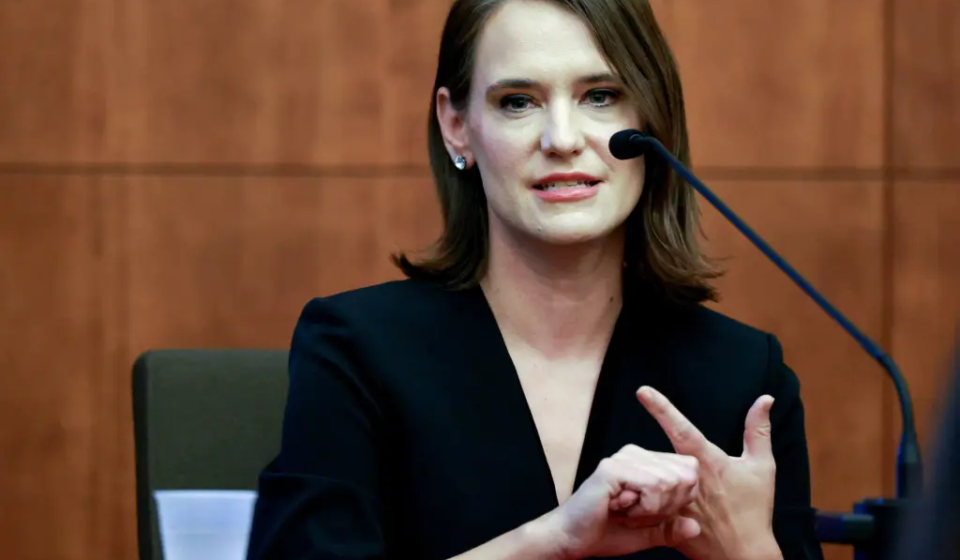
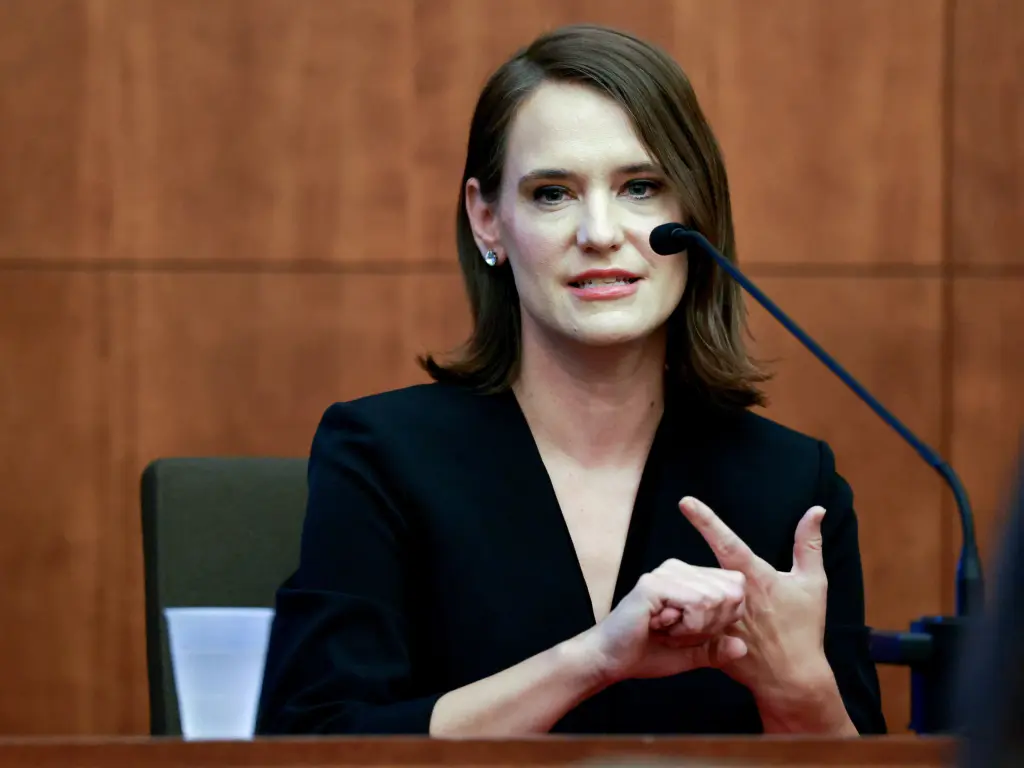
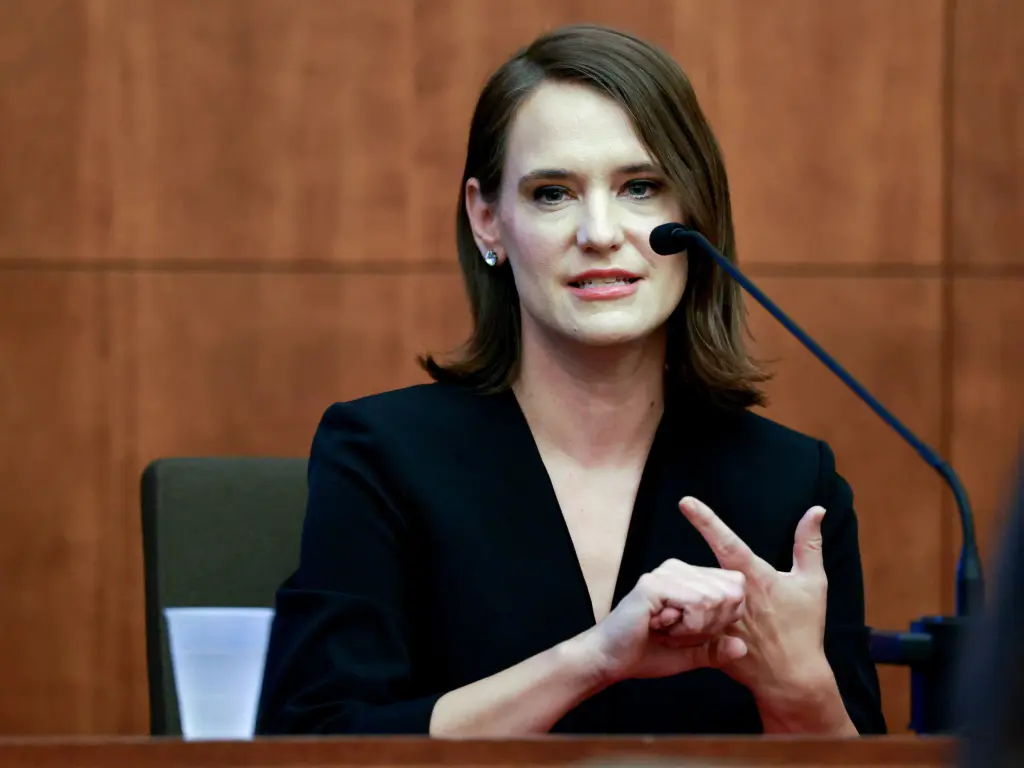
Rebecca Jollotta, a psychiatric nurse practitioner at South Shore Health’s Perinatal Behavioral Health Program, treated Clancy from November 29 to December 13, 2022. During that brief period, she prescribed Clancy a series of powerful psychiatric medications.
Jollotta testified that she believed Clancy had symptoms of postpartum depression but noted that Clancy was attributing her symptoms to medications rather than underlying mental illness. She told jurors that Clancy “never indicated she had a plan” or intent to kill herself or harm her children.
However, under cross-examination by defense attorney Kevin Reddington, Jollotta acknowledged that she never communicated with Dr. Jennifer Tufts, the psychiatrist also treating Clancy during the same period. Reddington also pointed out that Jollotta was on vacation while Clancy’s mental health was deteriorating:
“You basically told her to tough it out and just hit me up when I come back from vacation, right?“
The nurse practitioner has been sued by both Clancy and her ex-husband for allegedly overmedicating and failing to properly treat Clancy—allegations Jollotta has denied.
A Timeline of Warning Signs
The Lindsay Clancy haunting messages were just one part of a broader pattern of deteriorating mental health. Here is a timeline of the key events:
September 2022: Clancy sought psychiatric care after experiencing severe postpartum depression and anxiety following the birth of her third child, Callan, in May 2022.
November 29, 2022: Jollotta’s first virtual visit with Clancy.
November 30, 2022: Clancy messages: “What I’m really feeling is I cannot go on this way“.
December 2, 2022: Clancy sends the most haunting messages, expressing numbness, suicidal ideation, and fears of Ativan addiction.
December 6, 2022: In-person visit attended by both Lindsay and Patrick Clancy. Jollotta raises the possibility of an underlying bipolar disorder. Patrick reportedly responded: “My wife is not bipolar“.
December 12, 2022: Jollotta “strongly, strongly” recommends that Clancy check into Women and Infants Hospital in Rhode Island.
December 15, 2022: The Clancys call Jollotta, describing it as the “worst day for Lindsay.” She reports “persistent and intrusive thoughts of suicide” but “no active plan”. She goes to the ER but opts out of inpatient care.
December 20, 2022: Women and Infants turns Clancy away, reportedly because they believed she had been overmedicated.
January 24, 2023: Clancy kills her three children and attempts suicide.
The Medication Controversy: 13 Drugs in Months
One of the most disturbing aspects of the case is the sheer volume of medications Clancy was prescribed. The court has heard that Clancy was prescribed 13 different psychiatric medications in the months leading up to the killings.
Clancy repeatedly asked to change her medications despite concerns about sticking to a treatment plan. Jollotta testified that Clancy was scared about the impact of changing medications:
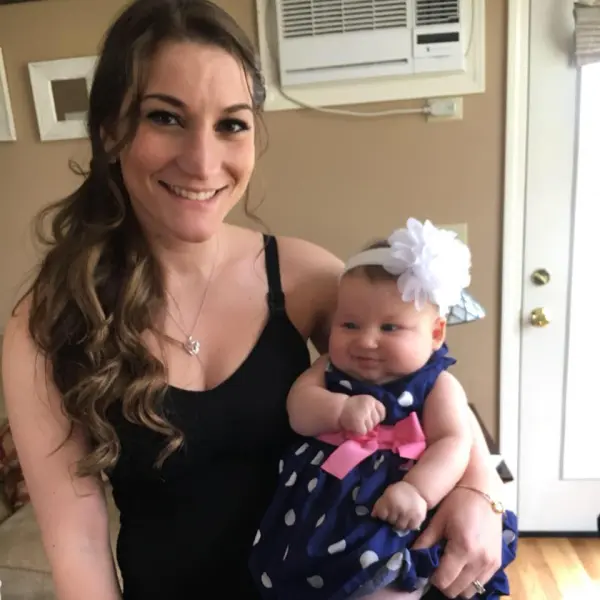
“It’s just a scary, very scary, stressful time for me, and starting new meds with side effects is very scary to me,” Clancy wrote.
Jollotta tried to reassure Clancy that intrusive thoughts are common with postpartum depression and anxiety and encouraged her to give medications more time to work. But the defense argues that Clancy was overmedicated and that her medical team failed to communicate with each other.
When Clancy went to Women and Infants Hospital on December 20, they turned her away—not because she wasn’t sick enough, but because of concerns she had been overmedicated on drugs. Ironically, the very system meant to help her may have been contributing to her deterioration.
What Is Postpartum Psychosis? Understanding the Defense
The defense’s case hinges on the claim that Clancy was suffering from postpartum psychosis—a rare but serious mental health emergency characterized by severe, rapid-onset psychiatric episodes such as mania, depression, or hallucinations.
Clancy has also alleged she was experiencing “command hallucinations”—a male voice in her head telling her to kill the children and herself. Prosecutors have suggested that Clancy may have been instructed by a psychiatrist to claim she heard voices, a theory the defense has vehemently denied.
Jollotta—who has treated five women with postpartum psychosis and hundreds with postpartum depression and anxiety—testified that she never had concerns Clancy was in psychosis. However, she did suspect Clancy might have bipolar disorder because of her strong reactions to SSRIs like Zoloft and Prozac.
Clancy told Jollotta that when she previously took Zoloft, “I didn’t sleep for 48 hours and I wasn’t tired“. The lack of sleep with no fatigue could be a symptom of a manic episode, Jollotta said. She believed Clancy might have been in a “mixed manic, hypomanic state”—racing thoughts and inability to sleep combined with depression and numbness.
The “Worst Day”: December 15, 2022
December 15, 2022, stands out as a critical moment in the timeline. The Clancys called Jollotta together, describing it as the “worst day for Lindsay”. She was having “persistent and intrusive thoughts of suicide”.
Patrick Clancy told Jollotta they would “likely go to MGH” (Mass General Hospital). Clancy did go to the emergency room that day but ended up opting out of checking into McLean Hospital, deciding instead to join an outpatient program at Women and Infants.
Just five days later, Women and Infants turned her away. The system that was supposed to catch her failed—repeatedly.
Patrick Clancy’s Forgiveness: “I Wasn’t Married to a Monster”
Perhaps the most remarkable aspect of this tragic case is the response of Patrick Clancy, Lindsay’s now ex-husband. Despite losing all three of his children—Cora, Dawson, and Callan—he has publicly forgiven Lindsay.
In an October 2024 interview with The New Yorker, Patrick said: “I wasn’t married to a monster—I was married to someone who got sick“.
Writing just days after his children died, Patrick shared an extensive statement on a GoFundMe page:
“I want to ask all of you that you find it deep within yourselves to forgive Lindsay, as I have. The real Lindsay was generously loving and caring towards everyone—me, our kids, family, friends, and her patients“.
He characterized Lindsay as a “loving and caring towards everyone”. Childhood friends and family have echoed this sentiment, describing Clancy as “a very loving mother who cared about her children”.
Patrick has since remarried, but his forgiveness of the woman who killed his children remains one of the most powerful and heartbreaking elements of this case.
Where the Trial Stands Today
The trial, which began in July 2026, has featured testimony from numerous medical experts, psychiatrists, and law enforcement officials. Key developments include:
Jurors visited the crime scene in a move reminiscent of the Karen Read case, retracing Patrick Clancy’s route and walking through the Duxbury home where the children were killed.
The former nanny, Elaine Rossi, testified that Clancy loved her children.
Clancy broke down in court as jurors heard graphic testimony about her children’s injuries, with the judge reminding jurors they cannot base their verdict on emotion.
Medical examiners testified about the fatal injuries: damage to Cora’s eyes consistent with strangulation, hemorrhaging in Dawson’s eyes, and brain injuries in 8-month-old Callan.
If convicted of first-degree murder, Clancy faces life in prison without parole.
Conclusion: A System That Failed
The Lindsay Clancy haunting messages are more than just evidence in a murder trial—they are a cry for help that went unanswered. A woman who was a labor-and-delivery nurse, who understood the medical system, who repeatedly asked for help, who expressed fears about addiction, who reported intrusive thoughts and suicidal ideation—was failed by that very system.
She was prescribed 13 different medications in a matter of months. Her providers didn’t communicate with each other. She was turned away from a hospital because she was “overmedicated”. And when she finally broke, she took the lives of her three young children before attempting to take her own.
This case has sparked a wider conversation about postpartum mental health, the care of vulnerable mothers, and the gaps in our healthcare system. As the trial continues, one question haunts us all: Could this have been prevented?
If you or someone you know is struggling with postpartum depression, anxiety, or suicidal thoughts, help is available. Call or text the National Maternal Mental Health Hotline at 1-833-TLC-MAMA (1-833-852-6262)—free, confidential, and available 24/7. For immediate crisis support, call or text 988 or visit 988lifeline.org.