
Bill Gates’ Daughter Phoebe Gates Faces 20-Year Federal Prison Risk in Alleged ‘Cookie Stuffing’ Scheme

Table of Contents
1. Introduction: The Allegations That Shocked Silicon Valley
Bill Gates’ daughter Phoebe Gates, 23, is facing serious allegations of involvement in a cookie stuffing scheme at her startup, Phia, which could carry a maximum federal prison sentence of 20 years. The allegations represent a stunning reversal of fortune for the Stanford graduate who once insisted she wanted to succeed “with no ties to my privilege or my last name.”
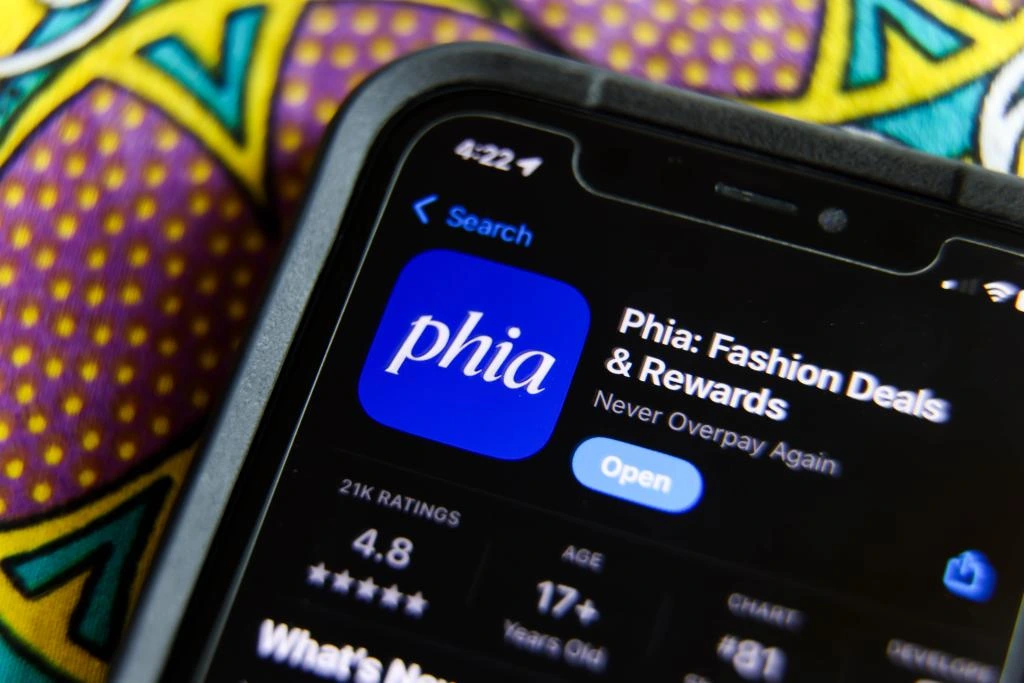
Phia, a digital personal shopping assistant co-founded by Phoebe Gates and her fellow Stanford alum Sophia Kianni, operates as a browser extension that helps shoppers automatically find discount codes and compare prices at online checkout counters. When a shopper uses one of its coupon codes at checkout, the software drops a “cookie”—a small tracking file—onto the user’s browser, signaling to the retailer that Phia helped drive the sale and should receive a commission.
But according to a bombshell Bloomberg investigation, Phia’s browser extension was secretly designed to plant its tracking cookies even when shoppers never used the app, taking credit—and commission—for sales it played no role in generating.
2. What Is Cookie Stuffing? Understanding the Controversial Practice
Cookie stuffing is a deceptive affiliate marketing practice where a platform plants its tracking cookies onto a user’s browser without any genuine interaction from the shopper. Here’s how it works:
The Legitimate Way:
- A shopper clicks an affiliate link or uses a coupon code from a platform like Phia
- The platform earns a commission for helping drive that sale
- The commission is legitimate because the shopper intentionally engaged with the platform
The Cookie Stuffing Scheme:
- A shopper visits a retailer’s website directly, without using any discount tool
- The platform secretly injects its tracking cookie into the shopper’s browser
- The retailer’s system is tricked into believing the platform drove the sale
- The platform receives a commission it never earned
According to independent researcher and affiliate marketing expert Ben Edelman, who analyzed Phia’s source code: “The most fundamental requirement in affiliate marketing is that commission is only paid if a user clicks. The rules don’t allow fake clicks, simulated clicks, imaginary clicks or hypothetical clicks. Only a real click will do.”
3. The 20-Year Federal Prison Risk Explained
Corporate attorney Ariel Givner, founder and principal attorney at Givner Law, warned on X that cookie stuffing is “typically treated as federal wire fraud in US courts” and carries a maximum penalty of up to 20 years in federal prison plus fines and restitution.

The legal severity stems from the fact that cookie stuffing involves using digital systems to fraudulently claim money from retailers and affiliate networks. By placing unauthorized tracking cookies on users’ browsers without their knowledge, Phia allegedly misappropriated commissions that belonged to other legitimate affiliates or the retailers themselves.
There is precedent for prosecution. In 2008, eBay sued a top affiliate named Shawn Hogan for defrauding the company through a cookie stuffing scheme. Hogan was sentenced to five months in federal prison in 2014 after being found to have defrauded eBay of an alleged $28 million in marketing fees.
4. Internal Messages Reveal Phoebe Gates Knew for Seven Months
Phia’s public response in July was that the issue was simply a “software bug” and that leadership had only become aware of the tracking behavior “within the last 24 hours.” But according to internal Slack messages and source code reviewed by Bloomberg, the founders had known for at least seven months—going back to December 2025.
One particularly damning exchange occurred on December 18, 2025. Phoebe Gates reportedly grew concerned that Phia wasn’t generating enough commission from Etsy. In a Slack channel, she wrote:
“worried this is an issue across the board…can u confirm auto pop for cookie drop is live on ALL sites w a coupon to confirm we are monetizing on all gmv”
This message demonstrates that Gates was actively inquiring about whether automated cookie dropping was live across partner sites—a direct request to ensure the cookie stuffing feature was functioning as intended.
In another exchange, co-founder Sophia Kianni reportedly suggested a feature that would drop a cookie whenever a user simply tried to close a Phia pop-up. When an engineer warned that this could be “against compliance,” Kianni responded:
“I guess we could say that the user is trying to open us and roll it back if they complain”
The engineer then noted that the existing feature—which automatically dropped cookies every two hours—was already “working pretty good.” Kianni replied:
“whatever we can do to keep these cookies dropping will be amazing thank you”
5. From Bug to Feature: The “Coupon Auto Drop” Dashboard

Perhaps the most damaging revelation is that what Phia called a software bug in July was actually a controllable feature on its internal dashboard, named “enable coupon auto drop.” This feature allowed the company to switch cookie dropping on and off at will—clear evidence that it was a deliberate design choice, not an accident.
Source code reviews revealed additional problematic features, including a “passive trigger” that automatically refreshed tracking cookies every two hours on top retail sites. This effectively increased the likelihood that Phia would overwrite competing referral links and secure payouts.
Ben Edelman, who reviewed Phia’s source code and data from impacted merchants, stated:
“These additional findings reveal a multipart effort designed to inflate Phia revenue despite lack of benefit to merchants. Phia should have spent more time learning the contracts to which they were bound and less time building tricks for quick profit.”
6. The Revenue Drop That Tells the True Story
After Phia disabled its cookie stuffing features in early July, the financial impact was dramatic. According to an internal revenue chart viewed by Bloomberg:
- Average daily revenue dropped from approximately $80,000 to between $10,000 and $28,000
- In June, cookie stuffing accounted for about 51% of the merchandise value Phia claimed credit for selling
A Phia data scientist’s internal analysis estimated that unauthorized cookie insertion accounted for roughly 51% of the total merchandise value Phia claimed credit for selling in June.
Phia’s spokesperson disputed these figures, stating that the preliminary analysis used “an incorrect methodology that overstated the potential impact” and that part of the revenue decline was because the company disabled most of its monetization efforts at that time, not just the cookie stuffing features.
However, the scale of the revenue drop—from $80,000 to a low of $10,000 per day—suggests that unauthorized cookie dropping was a substantial portion of Phia’s business model.
7. Major Retailers Affected: Nike, Gap, Nordstrom and More
The cookie stuffing scheme affected purchases made on the websites of several major retailers, including:
- Nike
- Gap
- Nordstrom
- Etsy (where Gates specifically expressed concern about commission levels)
Affiliate network Impact.com, responsible for distributing commissions to publishers like Phia, has suspended Phia from its marketplace and is reallocating commissions that had been attributed to the startup.
These retailers and affiliate networks are the primary victims of the cookie stuffing scheme, as they were forced to pay commissions for sales that Phia never actually facilitated.
8. Phia’s Response: Damage Control and Reversals
A Phia spokesperson provided the following statement:
“Any features causing misattributions were immediately removed over a month ago on July 7. We are reviewing every transaction, we are fully committed to and have already begun issuing all transaction reversals to brand partners as a result of any misattribution, and we are hiring a head of compliance to make sure something like this never happens again.”
The spokesperson added:
“We will learn from this and want to ensure our users have the best possible shopping experience, with features like our new digital closet and more to come.”
The statement did not directly address the specific allegations that Gates and Kianni knew about the cookie stuffing features for months. The company has already started paying back some commissions to retailers, but legal consequences may still follow.
9. The Ironic eBay Connection
One of Phia’s investors is eBay—the same company that successfully sued Shawn Hogan for a cookie stuffing scheme nearly two decades ago. In 2008, eBay worked with the FBI to build a case against Hogan, who was ultimately sentenced to five months in federal prison.
Independent marketplace journalist Liz Morton noted the irony on social media:
“eBay is very familiar w/ the kind of cookie stuffing fraud Phia allegedly engaged in—in fact, it worked directly w/ FBI to build a case against Shawn Hogan for similar fraud 20 years ago.”
Morton also suggested that Etsy could have a legal case against Phia.
10. What Happens Next? Legal and Business Consequences
The legal consequences for Phoebe Gates and Phia remain uncertain, but the path forward is fraught with risk:
Legal Risks:
- Federal wire fraud charges carry a maximum penalty of 20 years in federal prison
- Fines and restitution could be substantial
- Both Gates and Kianni could face individual prosecution if evidence shows they knowingly directed the scheme
Business Consequences:
- Impact.com has already suspended Phia from its marketplace
- Partner retailers may terminate their relationships with the startup
- Future funding rounds will likely be more difficult
- Phia’s ability to continue operations may be in question
The “Forbes 30 Under 30 Curse”:
Both Phoebe Gates and Sophia Kianni made the Forbes 30 Under 30 list earlier in 2026—a distinction that the internet has jokingly referred to as a curse, given that a number of its honorees have later been accused of fraud.
Conclusion: A Cautionary Tale of Ambition and Ethics

The Phoebe Gates cookie stuffing allegations raise profound questions about ethics, accountability, and the pressure to succeed in the hypercompetitive world of startups. Gates had publicly expressed “such a desire to prove myself” without her parents’ help—a sentiment that may have fueled aggressive tactics to show rapid growth.
Phia raised $30 million in 2025 from prominent backers including Hailey Bieber, Kris Jenner, Spanx founder Sara Blakely, and eBay. The startup appeared on a trajectory of extraordinary success—until a Bloomberg investigation revealed the questionable practices that may have been fueling its growth.
Whether Phoebe Gates faces federal charges remains to be seen. But the case serves as a warning that cookie stuffing is not just a marketing grey area—it’s a practice that US courts treat as wire fraud, and it can carry prison time. The internal Slack messages, now public, will likely be central to any legal proceedings.
For now, Phia says it has turned over a new leaf, hiring a head of compliance and pledging transparency. But as the revenue drop demonstrates, compliance may come at a steep cost to the business model that once powered their meteoric rise.
If you or someone you know is navigating the complex world of affiliate marketing compliance, consult legal professionals who specialize in digital advertising law. Visit the Federal Trade Commission’s advertising guidelines for more information on legitimate marketing practices.