New Jersey Gov. Mikie Sherrill is refusing to let local commuters and taxpayers foot the bill for FIFA World Cup 2026 transportation — as reports circulate that NJ Transit train tickets to MetLife Stadium could spike more than 775%, from $12.90 to over $100 for a single round trip.
The Core Conflict: Who Pays for Moving 40,000 Fans?
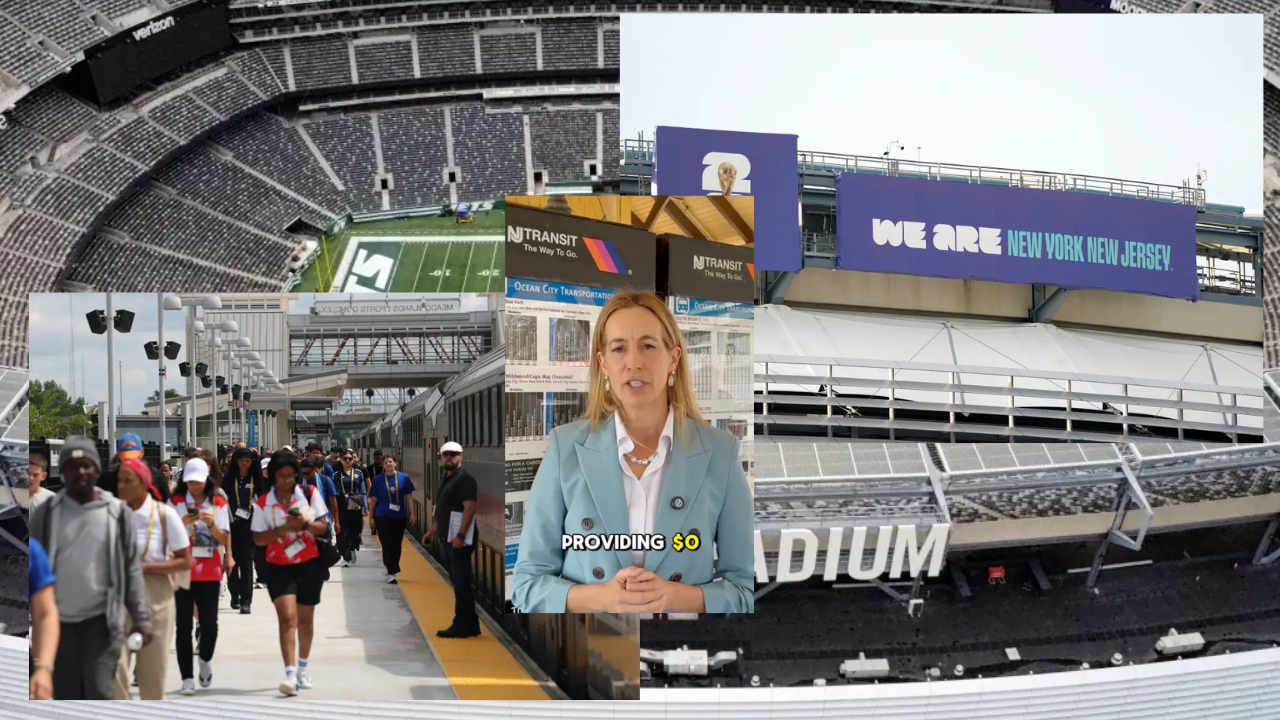
The dispute centers on a host agreement signed years ago that reportedly absolves FIFA — the global governing body of soccer — from paying anything toward local transportation for World Cup matches. Gov. Sherrill, who took office in January 2026, said her administration “inherited an agreement where FIFA is providing $0 for transportation to the World Cup — zero,” adding that leaves NJ Transit facing a $48 million bill to safely transport roughly 40,000 fans to and from each of the eight matches at MetLife Stadium in East Rutherford, New Jersey.
💡 Key Stat: FIFA is projected to earn approximately $11 billion in revenue from the 2026 World Cup. The $48 million NJ Transit bill would represent just 0.4% of that windfall.
How Bad Could the Price Hike Get?
According to a report by The Athletic published April 14, 2026, NJ Transit is considering charging more than $100 for a round-trip train ticket from New York Penn Station to MetLife Stadium on World Cup match days. Currently, that same journey costs $12.90 for a return trip — a staggering increase of over 775%.
A final pricing decision has not yet been announced, and NJ Transit officials have stated the plan remains in development. A full World Cup mobility plan is expected to be released by the end of April.
Penn Station Closures: Commuters Face Major Disruptions
The transportation challenges extend beyond pricing. NJ Transit has announced plans to close its section of New York Penn Station to all but World Cup-bound trains for four hours before each of the eight matches at MetLife Stadium.
Match days at MetLife Stadium: June 13, 16, 22, 25, and July 5 and 19.
Since several games fall on weekdays, this means regular NJ Transit commuters will be locked out of Penn Station during the evening rush hour from 4 PM to 8 PM on those days — forcing thousands of daily riders to find alternate routes home.
It’s Not Just New Jersey: A Pattern Across Host Cities
Frustration with World Cup transportation costs is spreading nationwide. Massachusetts faces a similar predicament:
- Gillette Stadium (Foxborough, MA): Round-trip bus tickets on the Boston Stadium Express cost $95 — even higher than the $80 MBTA train fare. A family of four would pay $380 just for bus transportation to a single match.
- Advance reservations are required, and tickets can only be purchased by fans with valid same-day match tickets.
Parking: Another Wallet-Buster
For those hoping to drive, parking comes with its own eye-watering price tag:
- American Dream Mall parking: $225 for group stage games and the round of 32; $300 for the round of 16. Parking for the finals remains undetermined.
- General parking at MetLife Stadium will not be permitted during World Cup matches — the only options are mass transit, ride-shares, chartered buses, or the American Dream Mall lot.
- FIFA’s average parking fee across U.S. host cities is approximately $175, with high-demand matches reaching $250–300. This marks a sharp increase from the initial $75 group-stage parking passes offered last fall.
- ADA accessible parking spaces are being offered at the same price as standard spaces, drawing criticism from disability advocates.
Federal Funding: $100 Million Already Allocated
In early March 2026, the Trump administration announced $100.3 million in federal transit funding for World Cup host cities through the Federal Transit Administration (FTA). The funds are intended to “support planning, capital, and operating expenses” for matches and related public events.
The money is apportioned based on stadium capacity and number of matches in each host city. However, it remains unclear exactly how much has been allocated to New Jersey, and transit agencies that receive the funding must repay it after the World Cup concludes — effectively a loan rather than a grant.
Political Pressure Mounts
Gov. Sherrill has made her position unequivocal: FIFA should pay for the rides.
“I won’t stick New Jersey commuters with that tab for years to come. That’s not fair. So here’s the bottom line, FIFA should pay for the rides, but if they don’t, I’m not gonna let New Jersey commuters get taken for one,” Sherrill said.
She is not alone. Senate Majority Leader Chuck Schumer (D-NY) issued a blistering statement on X:
“The least FIFA can do is ensure New York residents can go to the stadium without being gouged at the turnstile. I am demanding FIFA step up and cover transportation costs for host cities and states. New York commuters and residents should not subsidize an $11 billion windfall.”
New York Gov. Kathy Hochul has said prices will not be inflated on the MTA — though no MTA trains or buses actually travel to MetLife Stadium in New Jersey. That distinction hasn’t stopped the political back-and-forth across state lines.
England fans have also weighed in, with supporters’ groups calling this “another rip-off at this World Cup.”
FIFA’s Historical Position: Not Paying for Transit
FIFA has never historically funded local transportation to any World Cup match. The governing body’s position is that host cities and states — which bid for and eagerly accepted the opportunity to host — are responsible for the infrastructure costs associated with the tournament.
However, critics note that FIFA keeps virtually all revenue from ticket sales, broadcasting rights, sponsorships, and concessions, while leaving states and cities to manage the logistical burdens and expenses.
FIFA has projected record revenues exceeding $11 billion for the 2023–2026 cycle. Meanwhile, a report from The Independent found that 11 U.S. host cities face a collective financial shortfall of at least $250 million due to highly restrictive deals imposed by FIFA, with fan festivals and other required events costing individual cities an estimated $100–250 million each.
What’s at Stake for NJ Transit?
NJ Transit is facing an unprecedented operational challenge. The agency must:
- Move up to 40,000 fans to and from each of eight matches
- Coordinate with multiple agencies across state lines
- Manage Penn Station access restrictions without alienating daily commuters
- Cover $48 million in additional costs without a dedicated funding source from FIFA
- Finalize and announce pricing without sparking a public backlash that could depress attendance
Kris Kolluri, NJ Transit’s CEO, has indicated the full World Cup mobility plan will be announced by the end of April.
Historical Context: 1994’s World Cup Challenges
The United States last hosted the World Cup in 1994, when matches were split across nine venues including the then-Giants Stadium in East Rutherford. That tournament faced its own set of problems: unseasonably high temperatures tormented fans and players alike. The heat inside Michigan’s Pontiac Silverdome was so oppressive that some informally dubbed it the “sauna-dome.”
But even that tournament didn’t see transportation price hikes approaching 775%.
Bottom Line: What Happens Next?
Several outcomes remain possible:
| Scenario | Likelihood | Impact on Fans |
|---|---|---|
| FIFA agrees to cover some or all transportation costs | Low (FIFA has never done this before) | $12.90–$100 fares, but could be subsidized |
| NJ Transit implements $100+ fares as planned | High (plans already in motion) | Significant financial burden on attendees |
| Federal funding covers the gap | Moderate (repayment required, not a grant) | Short-term relief, long-term state debt |
| Legal or legislative intervention | Moderate (Sherrill exploring options) | Uncertain — could delay or modify pricing |
Gov. Sherrill has said she is actively looking at ways to shift the costs of hosting World Cup matches away from taxpaying citizens. Whether that means executive action, litigation, or further public pressure on FIFA remains to be seen.
FAQ: World Cup 2026 Transportation
Q: How much will NJ Transit tickets to MetLife Stadium actually cost?
A: As of April 2026, NJ Transit is reportedly considering round-trip fares over $100 — up from the usual $12.90. A final decision is expected by the end of April.
Q: When are the World Cup matches at MetLife Stadium?
A: June 13, 16, 22, 25, and July 5 and 19, 2026.
Q: Can I park at MetLife Stadium for World Cup matches?
A: No — general parking at MetLife Stadium will not be permitted. Fans must use mass transit, ride-shares, chartered buses, or park at American Dream Mall (where passes cost $225–300).
Q: Will Penn Station be closed during World Cup matches?
A: NJ Transit’s section of Penn Station will close to regular passengers for four hours before each match, including weekday rush hours from 4–8 PM.
Q: Has FIFA ever paid for local transportation before?
A: No — FIFA has historically not funded local transportation to any World Cup match, leaving host cities and states to bear those costs.
Sources include The New York Times, The Athletic, NBC New York, NJ.com, The Associated Press, and official statements from NJ Transit and the Federal Transit Administration. This article was published April 16, 2026.