

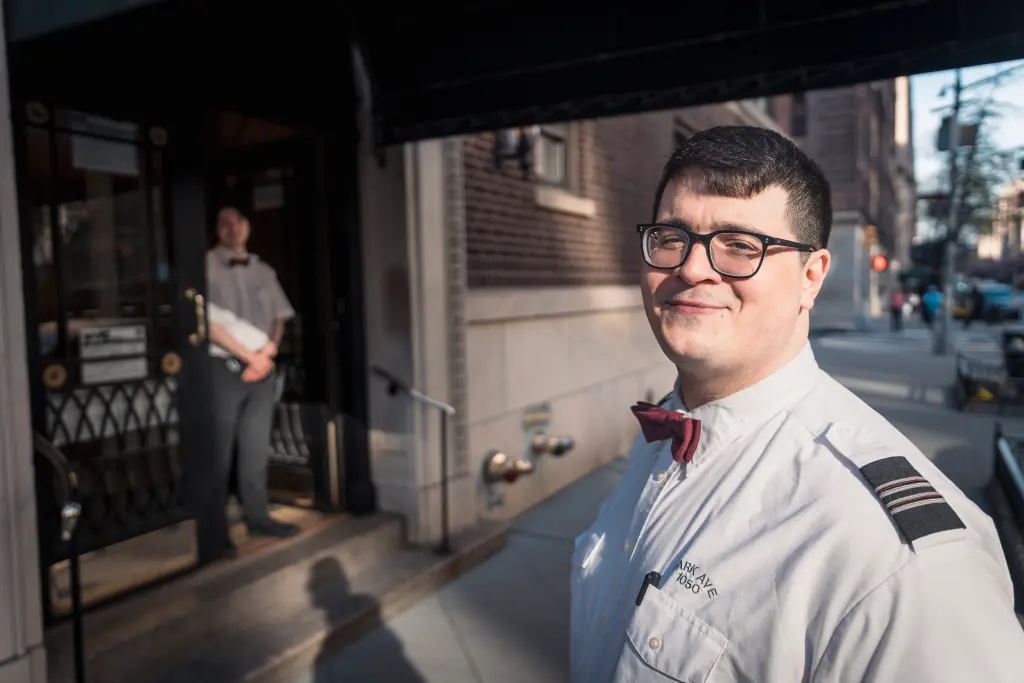
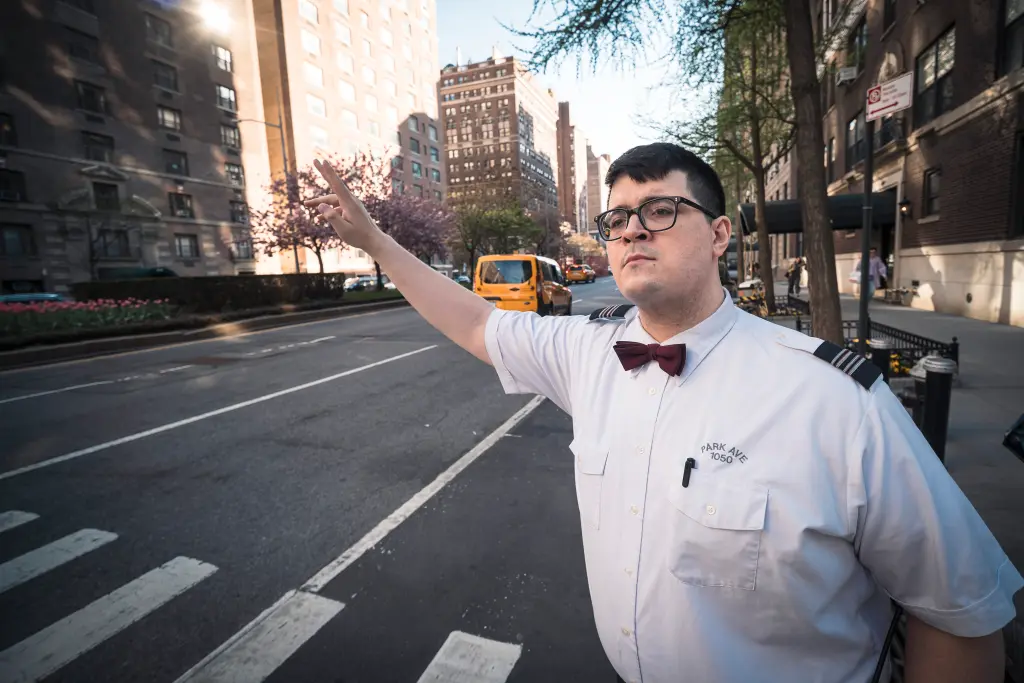
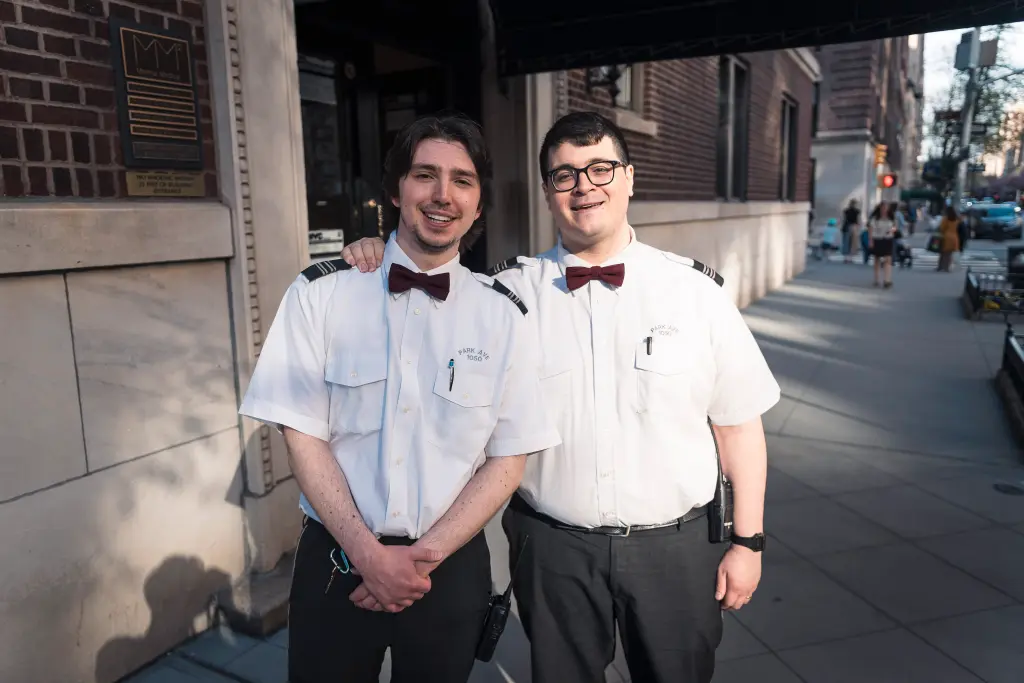
By the time most Park Avenue residents wake up and reach for their coffee, Charles Vega is already there. He has been there, at the same white-glove building on Manhattan’s most storied corridor, for nearly 15 years. He started at 19. He will turn 34 in December.
But on April 20, when the contract covering 34,000 residential building workers expires, Vega and his colleagues may be gone.
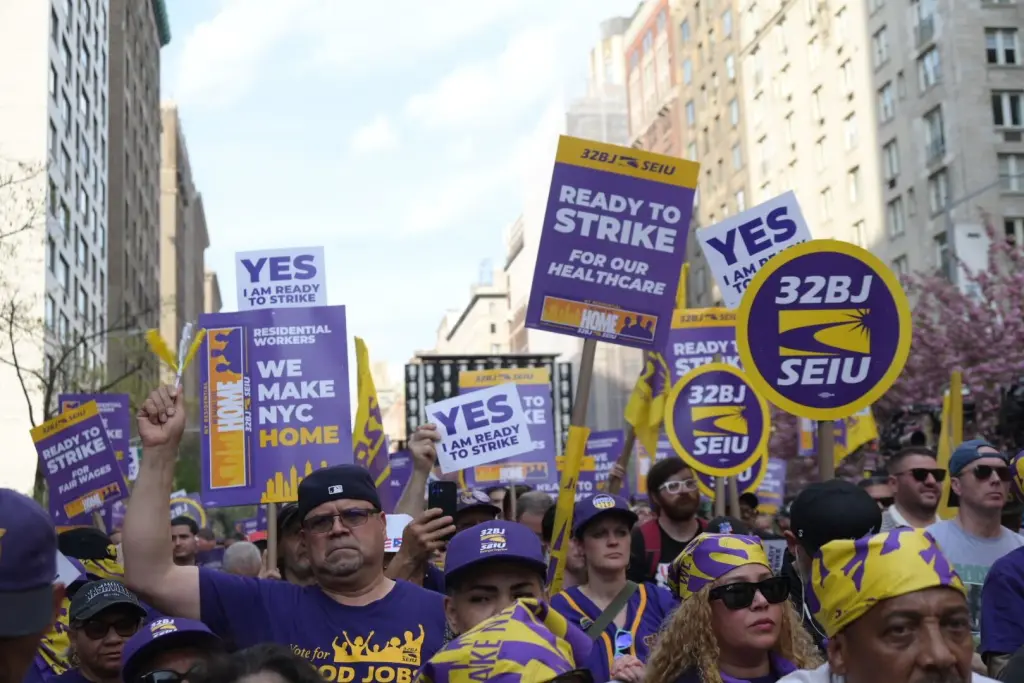
The union, 32BJ SEIU, and the Realty Advisory Board on Labor Relations (RAB) are locked in tense negotiations over wages, pension benefits, and the preservation of fully employer-paid healthcare — a hard line the union says it will not cross. A strike vote passed Wednesday at a rally steps from Vega’s building.
“In the event of a strike, so many of New York City residents would be without the services that we provide,” Vega told the Post. “We don’t want it to come to that.”
But they are prepared to.

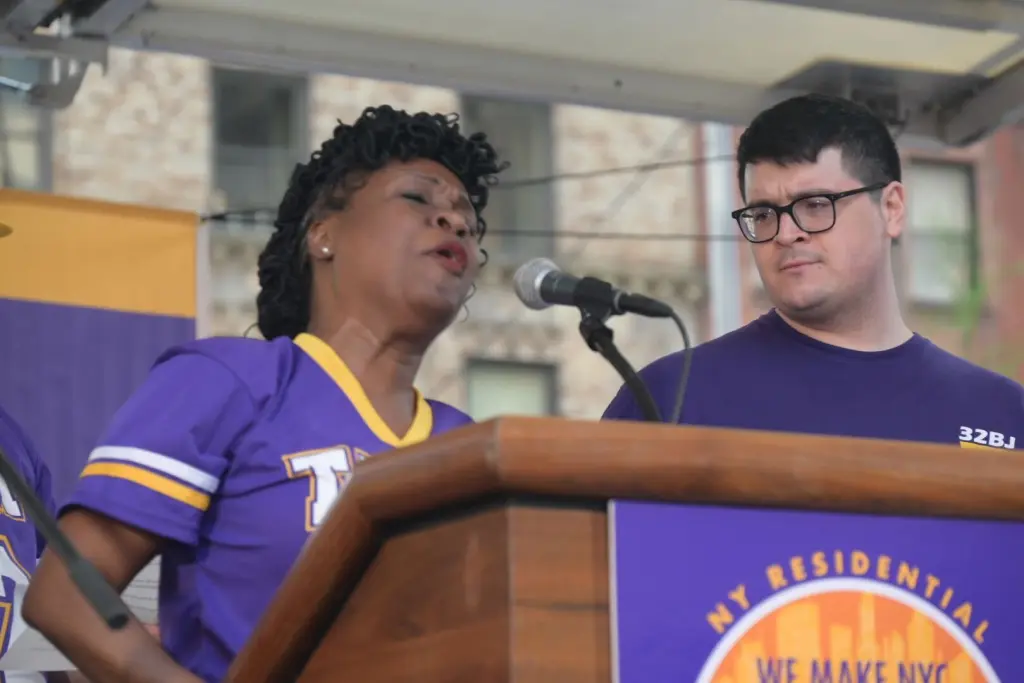
The Man Behind the Door
Vega works a swing shift — evenings three days a week, overnight two days a week. His building runs 24-hour service. On the nights he pulls the overnight, it is just him.
From his post, he manages a building of roughly 60 apartments:
- Packages: Over 100 a week
- Mail: Sorted and hand-delivered floor by floor
- Garbage: Two to three runs daily
- Tenants: Some have lived there since the 1970s
Most doormen average a salary of just $62,000 per year — a minimum of $29.78 per hour — in a city where the median rent has hit $5,000 a month.
Vega describes his relationship with residents not as professional but personal — something closer to family.
“I have shareholders that call us every day to just talk to us on the phone,” he said. “People who are elderly and they can’t get out of the house that often. I think almost immediately there would be an impact.”
What a Strike Would Look Like
The numbers are staggering:
| Category | Impact |
|---|---|
| Workers ready to strike | 34,000 |
| Residential buildings affected | 3,300+ |
| Residents impacted | ~1.5 million |
| Boroughs affected | Manhattan, Brooklyn, Queens, Staten Island |
| Last full-scale doorman strike | 1991 (12 days) |
Already, building management companies are circulating multi-page pamphlets urging tenants to:
- Slash laundry room use
- Minimize deliveries
- Brace for locked bicycle storage
- Take out their own trash
Vega also raised the possibility that sanitation workers, unwilling to cross a picket line, might not collect trash — leading to garbage piling up alongside empty lobbies and unstaffed entrances.
“That’s something that we don’t want,” he said. “But we might have to do if we’re not getting a fair deal.”
The Three Demands
The union’s position rests on three core pillars:
1. Wages That Keep Pace With Inflation
With Manhattan’s median rent at $5,000 and inflation still elevated, doormen earning $62,000 on average are struggling to afford the city they serve.
2. Stronger Pension Benefits
The union is asking for a pension increase for the first time ever in a contract fight. The fund has recovered from shakier years, and union representatives say now is the time to build on that foundation.
“You want to be able to retire in dignity,” Vega said. “You shouldn’t have to go back and work if you can’t make ends meet.”
3. Fully Employer-Paid Healthcare — The Red Line
Right now, 32BJ members pay zero in premiums. The RAB wants to change that. The union calls it a line they will not cross.
“When it comes to premium sharing, it’s just not something that we’re willing to give up,” Vega said flatly. “Why would we? It’s something that we’ve had for so long.”
Vega’s wife has medical issues and is on his plan. The absence of a monthly premium bill is not a perk — it is what makes that possible.
“For her to not have to worry about that, it’s like a blessing,” he said. “It’s not something that you maybe see every day, but the reality is it’s a special thing and we want to keep that.”
The RAB’s Position
The Realty Advisory Board on Labor Relations represents building owners and management companies. Their counter-proposal reportedly includes premium sharing — requiring workers to contribute to their healthcare costs for the first time.
32BJ SEIU president Manny Pastreich said at Wednesday’s rally:
“While the residential real estate industry is collecting record high rents, this city is becoming more unaffordable for working people every day.”
Vega put it more directly. The union went through the pandemic as essential workers — present, unprotected, uncelebrated. They showed up. Now, with the industry flush and their own cost of living spiraling, they are being asked to absorb new healthcare costs.
“To have us do that in a time when vacancy in Manhattan is so low and rent is so high,” he said, “it’s not great and it’s not something that we’re going to stand for. Absolutely not.”
The Human Stakes
For Vega, the logistics are almost beside the point. The stakes are human.
Last week, he and his colleagues responded to a tenant who had fallen in her apartment and couldn’t get up. They got the call. They went up. They helped her. No wait. No 911 hold music. Just the people who were already there.
“They give us a call, ‘Hey, can you help me?’ And we just go up and do it,” Vega said.
Immunocompromised residents who venture out once a week know his face better than most of their neighbors. For some, he is the most consistent human presence in their daily lives.
“The only thing that I have gotten from my residents is 100% support,” he said. “And that’s really just so nice to hear because it just shows you how much you’re appreciated every day.”
Historical Context: The 1991 Strike
The last full-scale doorman strike in New York City took place in 1991 and lasted 12 days. At the time, 25,000 workers walked off the job, leaving luxury buildings across Manhattan to fend for themselves.
Vega recalled speaking with a shareholder just yesterday who remembered the 1976 doorman strike. That dispute lasted 11 days.
“I was talking to a shareholder just yesterday who remembered the 1976 doorman strike,” he said.
What Happens Next
- April 20, 2026: Current contract expires at midnight
- Immediately following: 34,000 workers could walk off the job
- Negotiations continue: Both sides are still talking, but Vega says the RAB doesn’t seem to be taking the threat seriously
- Potential sanitation impact: Sanitation workers may refuse to cross picket lines, leading to trash accumulation
“I don’t really see it as a fight between us and the residents,” Vega said. “It’s more about the RAB — between them and us, the union. We just all want to work. We’re here to do a job and we take pride in it and that’s what we want to do.”
FAQ: NYC Doorman Strike
Q: When could the strike happen?
A: The contract expires April 20, 2026. Workers could walk off the job immediately after.
Q: How many workers are involved?
A: 34,000 residential building workers — doormen, porters, superintendents, handypeople, and resident managers.
Q: How many buildings would be affected?
A: Over 3,300 residential buildings across Manhattan, Brooklyn, Queens, and Staten Island.
Q: What are the main issues?
A: Wages to keep pace with inflation, stronger pension benefits, and keeping healthcare fully employer-paid (no premium sharing).
Q: How much do doormen currently earn?
A: The average salary is about $62,000 per year, or $29.78 per hour minimum.
Q: When was the last doorman strike?
A: 1991. It lasted 12 days.