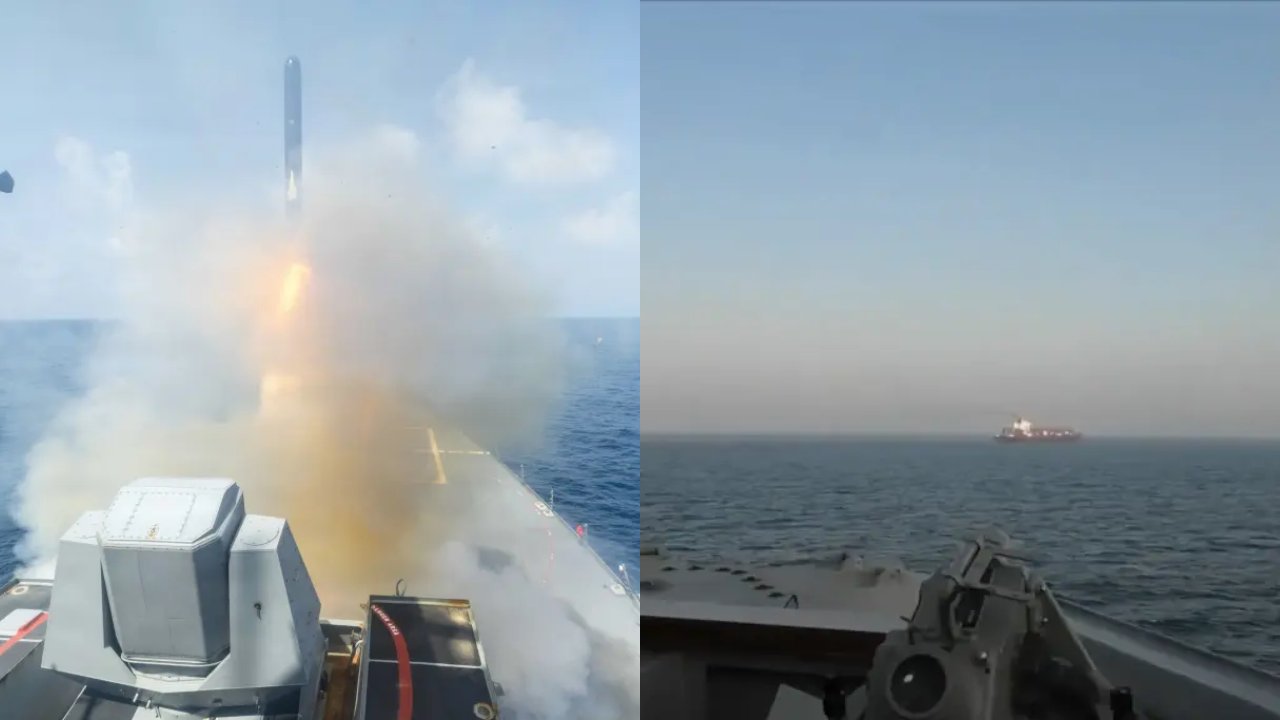
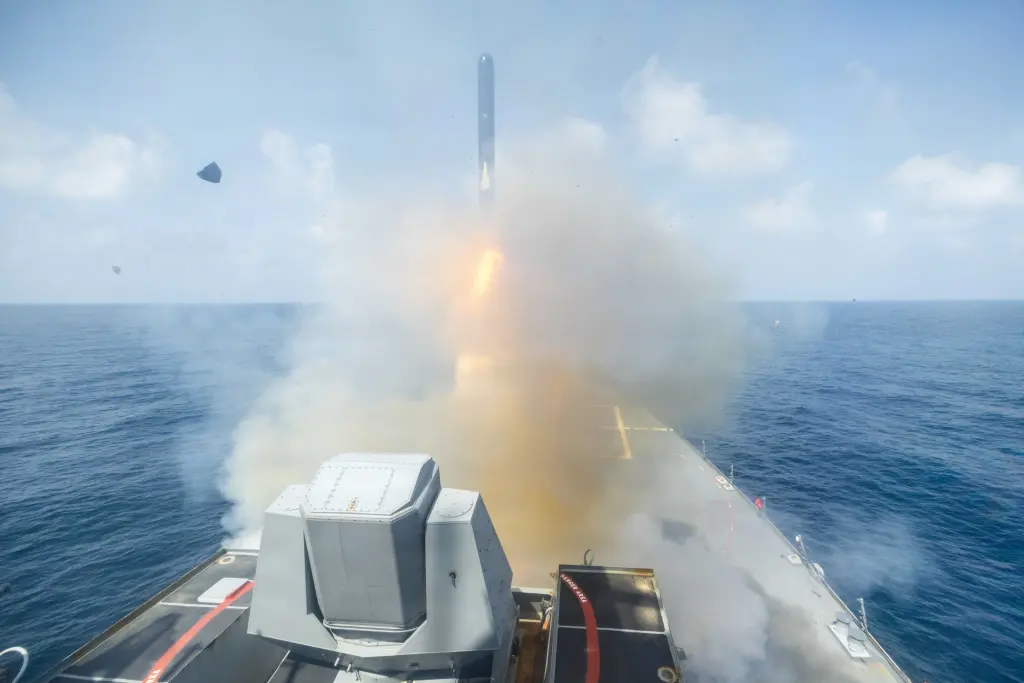
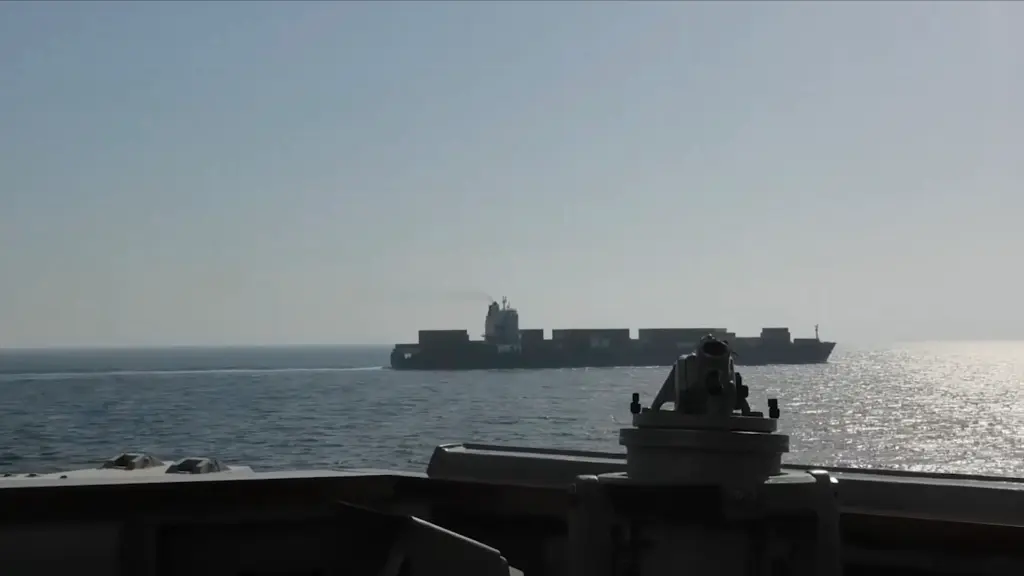
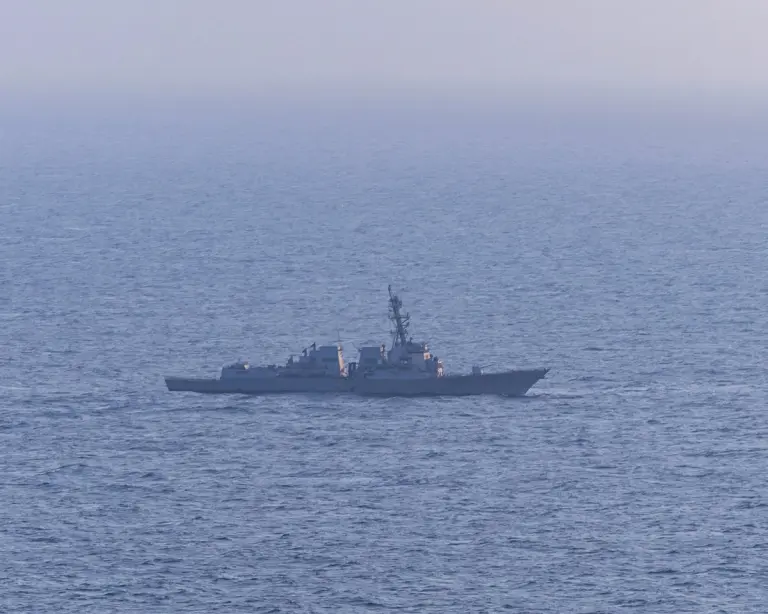
The USS Spruance, an Arleigh Burke-class destroyer, intercepted and disabled an Iranian-flagged cargo ship in the Gulf of Oman on Sunday after it ignored warnings to stop, President Trump announced – blowing “a hole” in its engine room and taking the vessel into US custody as tensions over the Strait of Hormuz blockade escalate.
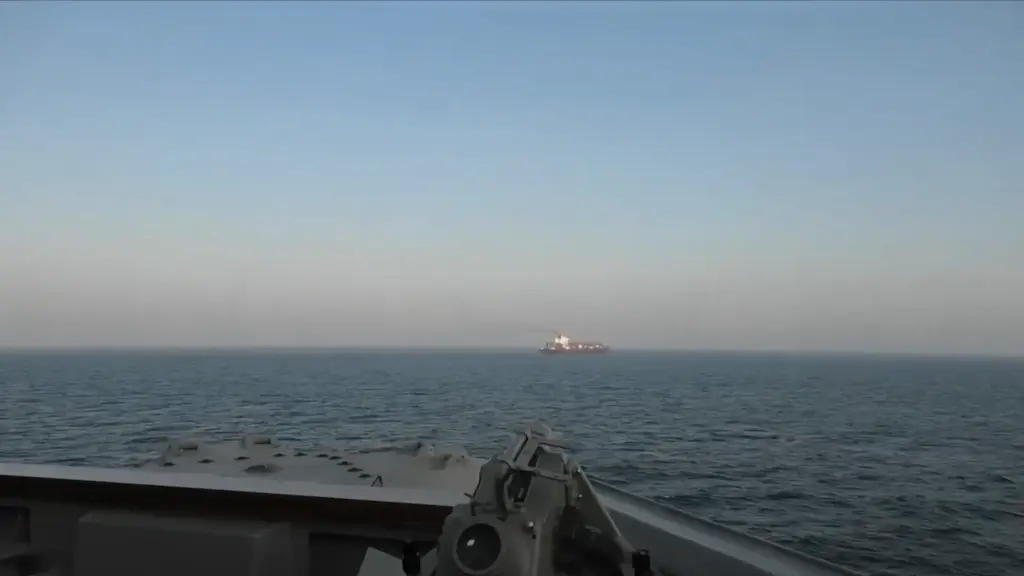
The Touska, a nearly 900‑foot cargo ship “weighing almost as much as an aircraft carrier,” according to Trump, attempted to breach the US naval blockade of Iranian shipping lanes. The president boasted on Truth Social: “Today, an Iranian-flagged cargo ship named TOUSKA… tried to get past our Naval Blockade, and it did not go well for them.”
A video released by US Central Command (CENTCOM) shows a Marine warning those aboard to “vacate your engine room” before firing multiple blasts. The ship’s horn sounds, followed by explosions. The Touska is now under US control, with Marines aboard.
“Right now, U.S. Marines have custody of the vessel,” Trump said. “The TOUSKA is under U.S. Treasury Sanctions because of their prior history of illegal activity. We have full custody of the ship, and are seeing what’s on board!”
The Blockade: Enforcing ‘Less Than 10% of US Naval Power’
The seizure comes one week after Trump announced a naval blockade of Iranian ships passing through the Strait of Hormuz – a critical chokepoint through which roughly one‑fifth of the world’s seaborne oil flows. Iran had been sporadically firing on vessels, laying mines (some of which Tehran claims to have lost track of), and deterring commercial traffic.
Secretary of War Pete Hegseth said the US is enforcing the blockade with “less than 10% of America’s naval power,” signaling a light footprint despite the high stakes.
The Touska was already under US Treasury sanctions for prior illegal activity. Its attempted run of the blockade was seen as a direct challenge to the US posture. The Navy’s response – disabling the vessel rather than sinking it – allows for inspection and seizure of any contraband.
Peace Talks in Peril: Iran Refuses to Negotiate
The military action comes as the White House pushes for a diplomatic end to the two‑month‑old US‑Iran war. A two‑week ceasefire is set to expire on Tuesday, April 21. Trump has dispatched special envoys Steve Witkoff and Jared Kushner to Pakistan for another round of talks, with Vice President JD Vance leading discussions.
But Iran has refused to participate. State‑run IRNA quoted officials saying Tehran’s absence stems from “Washington’s excessive demands, unrealistic expectations, constant shifts in stance, repeated contradictions, and the ongoing naval blockade, which it considers a breach of the ceasefire.”
Trump has demanded Iran abandon its nuclear program, hand over all enriched uranium (much of which has been buried underground and bombed), and fully reopen the Strait of Hormuz. Tehran considers those terms non‑negotiable.
“Iran stated that its absence from the second round of talks stems from what it called Washington’s excessive demands,” IRNA reported.
A Dangerous Escalation: From Blockade to Boarding
The seizure of the Touska is the first direct US‑Iran naval confrontation since the blockade was announced. While US forces have turned back other vessels, this is the first time they have disabled, boarded, and taken custody of an Iranian ship.
CENTCOM released a video of the warning: “Motor vessel Touska, vacate your engine room. We are prepared to subject you to disabling fire.” After the blasts, the ship was stopped and boarded.
Trump’s language – “blowing a hole” – suggests the use of precision munitions, likely from the USS Spruance’s 5‑inch gun or a small‑caliber warning shot escalated to a disabling strike. The crew is believed to have survived, though no casualty figures have been released.
The US has not yet announced what, if anything, was found on board. The Touska was under sanctions for “prior illegal activity,” possibly including oil smuggling or weapons transfers.
Iran’s Hardline Turn: IRGC Takes Full Control
Sunday’s seizure coincides with reports that Iran’s Islamic Revolutionary Guard Corps (IRGC) has effectively taken full control of the country’s military and negotiation team, sidelining more moderate factions. Analysts say the hardliners are unlikely to back down, raising the risk of further escalation.
Iran has also re‑closed the Strait of Hormuz, declaring that no ships may transit without Iranian permission. The US, however, continues to enforce its own blockade, creating a dangerous game of chicken in one of the world’s most vital waterways.
“The Islamic Guard takes full control of Iran, sidelines moderates,” according to a New York Post analysis. That shift makes diplomacy even more difficult.
What Comes Next: Ceasefire Expiration and Potential Bombing Campaign
The two‑week ceasefire between the US‑led coalition and Iran ends Tuesday, April 21. Trump has warned that if no peace agreement is reached, he will order the bombing of “energy infrastructure and bridges in Iran.”
The president has also demanded that Iran agree to fully reopen the Strait of Hormuz – something Tehran has refused while the US blockade remains.
With Iran refusing to attend talks and the US seizing its ships, the chances of extending the ceasefire appear slim. The coming days could see a return to full‑scale hostilities, including airstrikes on Iranian soil.
FAQ: US Navy Seizes Iranian Cargo Ship
Q: What happened to the Iranian cargo ship Touska?
A: The USS Spruance disabled it with gunfire after it ignored warnings to stop. US Marines then boarded and took custody of the vessel.
Q: Was anyone killed?
A: Casualty figures have not been released. Trump said the US “blew a hole” in the engine room; the crew likely survived.
Q: Why was the ship targeted?
A: It attempted to breach the US naval blockade of Iranian shipping lanes in the Strait of Hormuz. It was also under Treasury sanctions for prior illegal activity.
Q: What is the status of peace talks?
A: Iran has refused to participate in the next round, citing excessive US demands and the ongoing blockade. The ceasefire expires April 21.
Q: What will the US do next?
A: Trump has threatened to bomb Iranian energy infrastructure and bridges if no deal is reached. The US continues to enforce the blockade.
Q: Where can I find updates?
A: Follow CENTCOM and White House briefings, or check the New York Post for continuing coverage.