Convicted NYPD sergeant Erik Duran broke his silence Monday, just hours after posting $300,000 bail and walking out of an upstate prison, thanking his family, God, and his “brothers and sisters in blue” for their support – and vowing to fight his manslaughter conviction “with the same determination I demonstrated throughout my career in the NYPD.”
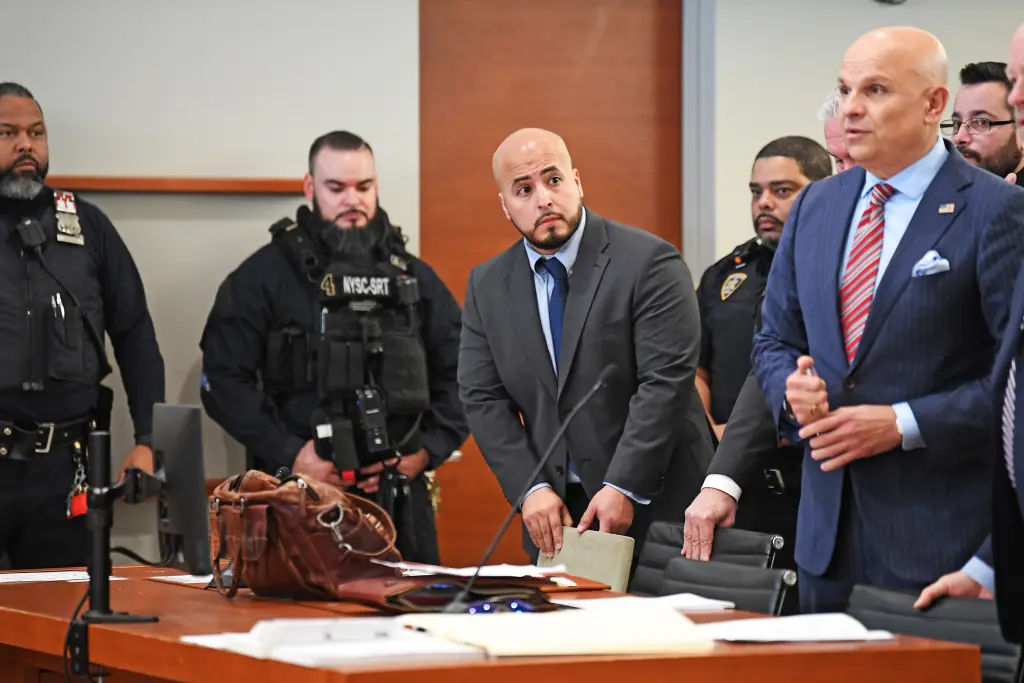
Duran, 41, was found guilty of second-degree manslaughter in February following a non-jury trial before Bronx Judge Guy Mitchell. The 13-year veteran was sentenced on April 9 to three to nine years in prison for tossing a cooler during a 2023 Bronx buy-and-bust operation that fatally struck suspect Eric Duprey. He was released pending appeal on Monday after his legal team posted the $300,000 bond.
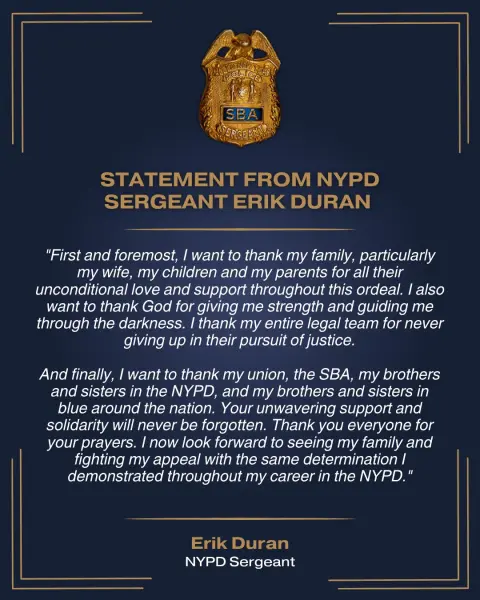
“First and foremost, I want to thank my family, particularly my wife, my children and my parents for all their unconditional love and support throughout this ordeal,” Duran said in a statement released by the NYPD Sergeants Benevolent Association (SBA). “I also want to thank God for giving me strength and guiding me through the darkness.”
Duran also expressed gratitude for his police family, saying: “I want to thank my union, the SBA, my brothers and sisters in blue around the nation. Your unwavering support and solidarity will never be forgotten.”

The Case: A Freak Accident or Criminal Negligence?
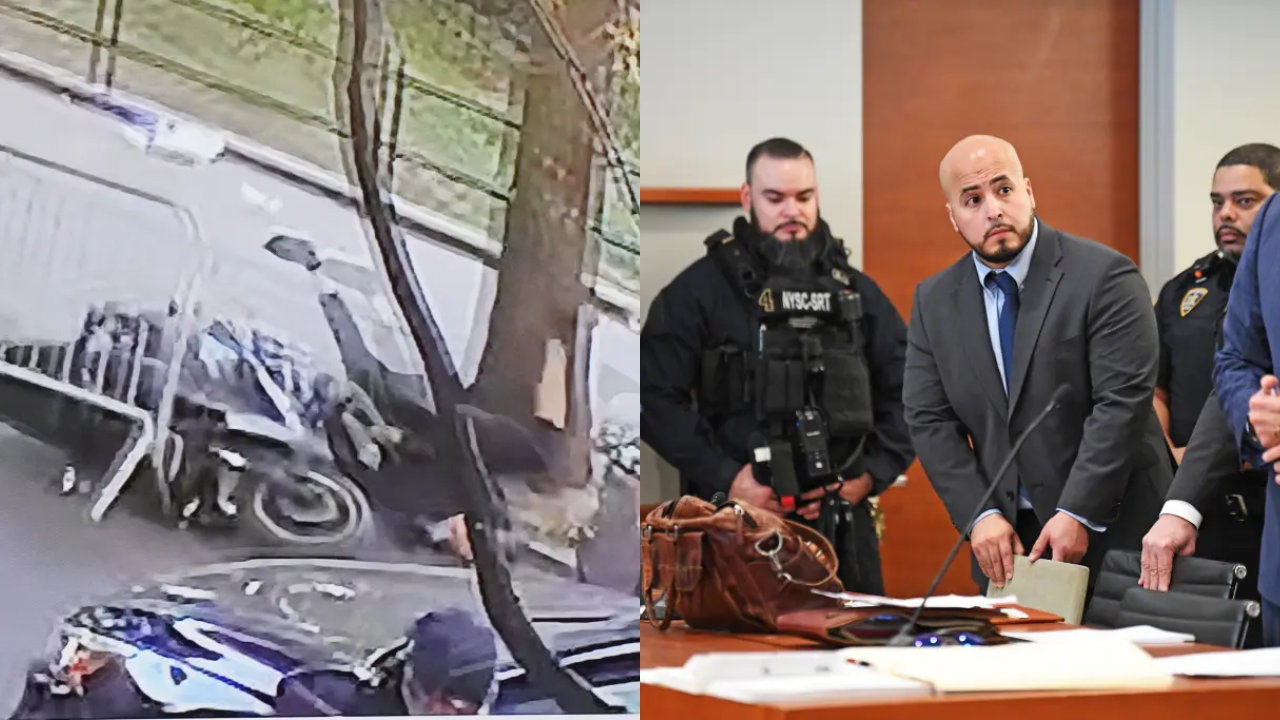
The incident occurred on August 23, 2023, during a plainclothes buy-and-bust operation in the Bronx. According to trial testimony, Duran and other officers were attempting to arrest a suspect when Duprey, 33, who was not the target of the operation, fled on foot. Duran threw a cooler – a large plastic Igloo brand cooler – at Duprey, striking him in the back. Duprey fell, struck his head on the pavement, and later died from his injuries.
Prosecutors argued that Duran used excessive and unjustified force, turning a non-lethal object into a deadly weapon. The defense contended that Duran was acting in the heat of the moment to prevent a suspect from escaping and that he had no intention of causing serious injury.
Judge Mitchell, who presided over the non-jury trial, rejected the defense’s arguments and convicted Duran of second-degree manslaughter, a class C felony. At sentencing, Mitchell noted that Duran’s actions were “reckless” and that the consequences were foreseeable.
Duran’s legal team immediately filed a notice of appeal. Under New York law, Duran was entitled to bail pending appeal because his sentence was less than five years and he was not considered a flight risk. The appellate court set bail at $300,000, which was posted on Monday.
The ‘Cooler Cop’ and Public Reaction
Duran’s case has divided public opinion. To his supporters, he is a dedicated officer who made a split-second decision in a chaotic situation and tragically misjudged the outcome. To his detractors, he is a symbol of police recklessness.
The case gained national attention in part due to Duran’s unassuming nickname – the “cooler cop” – and the bizarre nature of the weapon. Social media memes and jokes proliferated, but the underlying tragedy is serious.
Duprey’s family has expressed outrage at Duran’s release. In a statement, they said: “Eric Duprey lost his life. Another man threw a cooler at him like he was trash. Now that man is free on bail. Where is the justice?”
Duran has maintained his innocence throughout. In his statement, he thanked his legal team “for never giving up in their pursuit of justice.”
Unprecedented Support from Police and Fans
Duran’s cause has been taken up by police unions across the country. The SBA organized a legal defense fund that raised hundreds of thousands of dollars. More than 11,000 cops nationwide signed a petition asking Judge Mitchell to impose only probation.
In an extraordinary show of support, the New York Islanders hockey team allowed a QR code for Duran’s legal fund to be displayed on the UBS Arena’s big screen during a home game against the Carolina Hurricanes last Tuesday. A portion of the 50/50 raffle proceeds was also donated to the fund. The gesture drew both praise and criticism, with some applauding the team’s support for a convicted officer and others condemning it.
“I want to thank my union, the SBA, my brothers and sisters in blue around the nation. Your unwavering support and solidarity will never be forgotten,” Duran said.
The Appeal: What’s Next for Duran?
Duran’s legal team now has 120 days to file a brief with the Appellate Division of the New York Supreme Court. The appeal will likely focus on several key issues:
- Whether Judge Mitchell erred in denying Duran’s motion to dismiss the indictment for insufficient evidence.
- Whether the judge improperly excluded expert testimony on police use-of-force standards.
- Whether the sentence of three to nine years was unduly harsh given Duran’s lack of criminal history and years of service.
Legal experts note that appeals in manslaughter cases are difficult to win, but not impossible. The appellate court may uphold the conviction, reduce the sentence, or order a new trial. Duran remains free on bail during the appeal process, which could take a year or more.
If the conviction is upheld, Duran will be required to return to prison to serve the remainder of his sentence. If the appeal succeeds, he could be acquitted or receive a lesser sentence.
The Victim: Eric Duprey
Eric Duprey, 33, was a Bronx resident with a criminal record that included drug and theft offenses. At the time of his death, he was not the target of the buy-and-bust operation. His family described him as a father and a man who was trying to turn his life around. His death has become a rallying cry for police reform advocates, who argue that the use of force – even with non-lethal objects – must be strictly limited.
Duprey’s mother has attended every court hearing, often in tears. She has not commented on Duran’s release but has previously said: “My son didn’t deserve to die over a cooler.”
A Broader Debate: Police Use of Force and Accountability
Duran’s case is part of a larger national conversation about police accountability and the use of force. While high-profile cases involving firearms often dominate headlines, this case highlights the potential lethality of seemingly mundane objects when used as weapons.
According to a 2025 report by the Police Executive Research Forum (PERF) , there has been a 22% increase in the use of thrown objects by officers over the past decade, often in foot pursuits. The report recommends that departments provide clearer guidance on when such force is appropriate.
The NYPD has since revised its use-of-force policies, though the department declined to comment on Duran’s case specifically.
What Happens Next
- Appeal process: Duran’s attorneys will file their brief within 120 days. The appellate court may hear oral arguments in late 2026 or early 2027.
- Bail conditions: Duran must remain in New York and check in with authorities as required.
- Family life: Duran, a married father of three, returns to his family while fighting the conviction.
- Legislative impact: The case may influence proposed legislation in Albany regarding police use of force and the admissibility of expert testimony in such trials.
FAQ: Erik Duran Case
Q: What did Erik Duran do?
A: He threw a cooler at a fleeing suspect, Eric Duprey, during a 2023 Bronx buy-and-bust operation. Duprey fell, struck his head, and died.
Q: What was he convicted of?
A: Second-degree manslaughter, a class C felony. He was sentenced to three to nine years in prison.
Q: Why was he released on bail?
A: New York law allows bail pending appeal for defendants with sentences under five years and no flight risk. The appellate court set bail at $300,000.
Q: What did he say in his statement?
A: He thanked his family, God, his legal team, and the police community for their support. He vowed to fight his appeal.
Q: Did the New York Islanders support him?
A: Yes, the team allowed a QR code for his legal fund to be shown on the arena’s big screen and donated a portion of a 50/50 raffle to his defense.
Q: Where can I find updates?
A: Follow the NYPD Sergeants Benevolent Association or local news outlets.