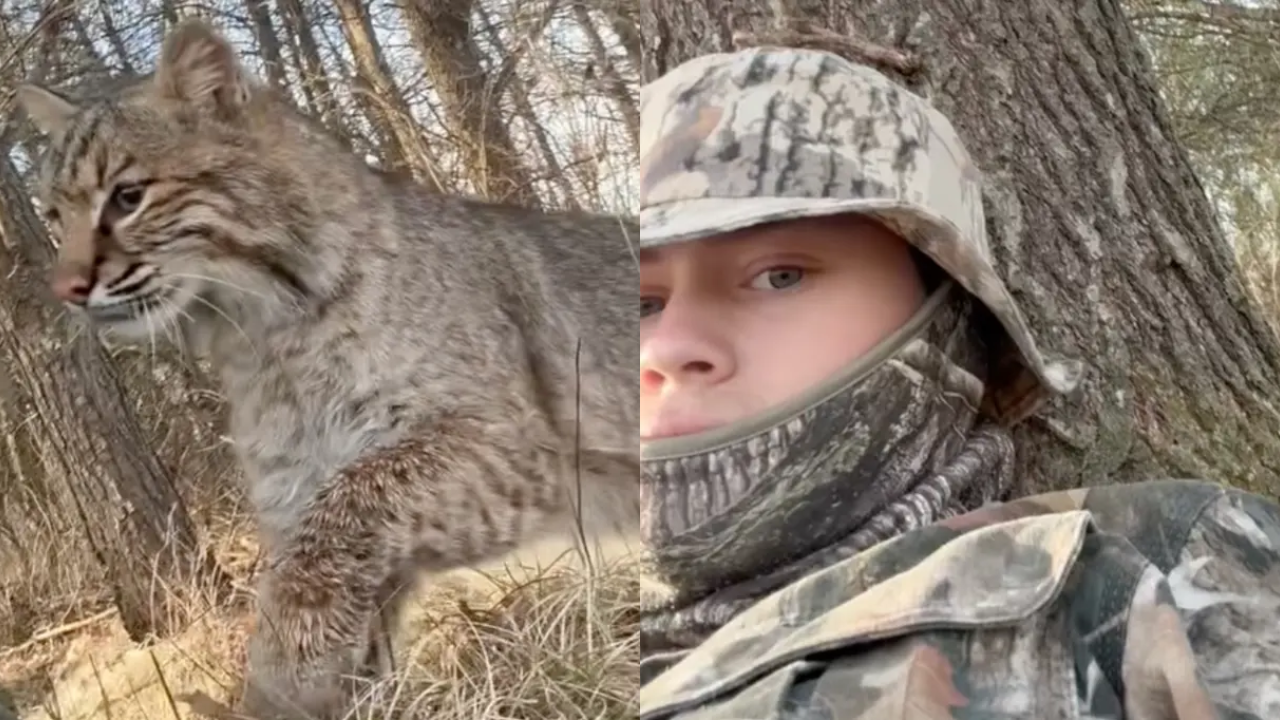
NEKOOSA, Wis. – A 19-year-old turkey hunter found himself on the wrong end of the predator-prey relationship when a bobcat launched a surprise attack, sinking its claws into his arm before he could react. Carson Bender, who was hunting on private land near Nekoosa, captured the terrifying encounter on his phone – and the video has since gone viral. Despite the mauling, Bender shook off the cat, got patched up at a doctor’s office, and returned to the same spot the very next morning to finish his hunt.
Bender was set up at the base of a tree, focused on a turkey strutting nearby, when he turned around to find a bobcat stalking him. The cat, estimated to weigh around 25 pounds, locked eyes with him for a few tense moments before lunging.
“I pan over with the phone, and the bobcat is just staring at me,” Bender told the Milwaukee Journal-Sentinel. “I was like, uh-oh.”
The video shows the bobcat creeping closer, then suddenly pouncing. The teen managed to shake the animal off before it could do serious damage, suffering only “a few scratches on the shoulder.” He then went to the doctor’s office for a checkup.
“Missed a bird three minutes later at 35 yards, then headed to the doctor’s office,” he joked on Instagram.
Remarkably, Bender said he never lost his cool. “It might sound dumb, but I wanted to kill that turkey that was strutting in,” he said. “It was a lot of action in just a minute or so, but I never really felt threatened and went with my instincts.”
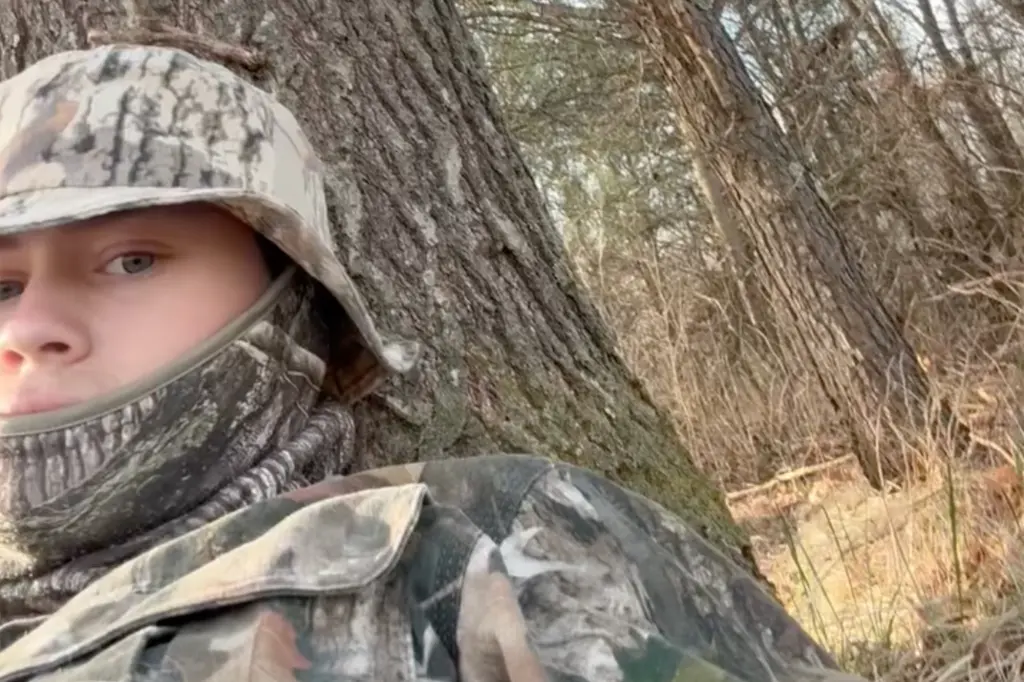
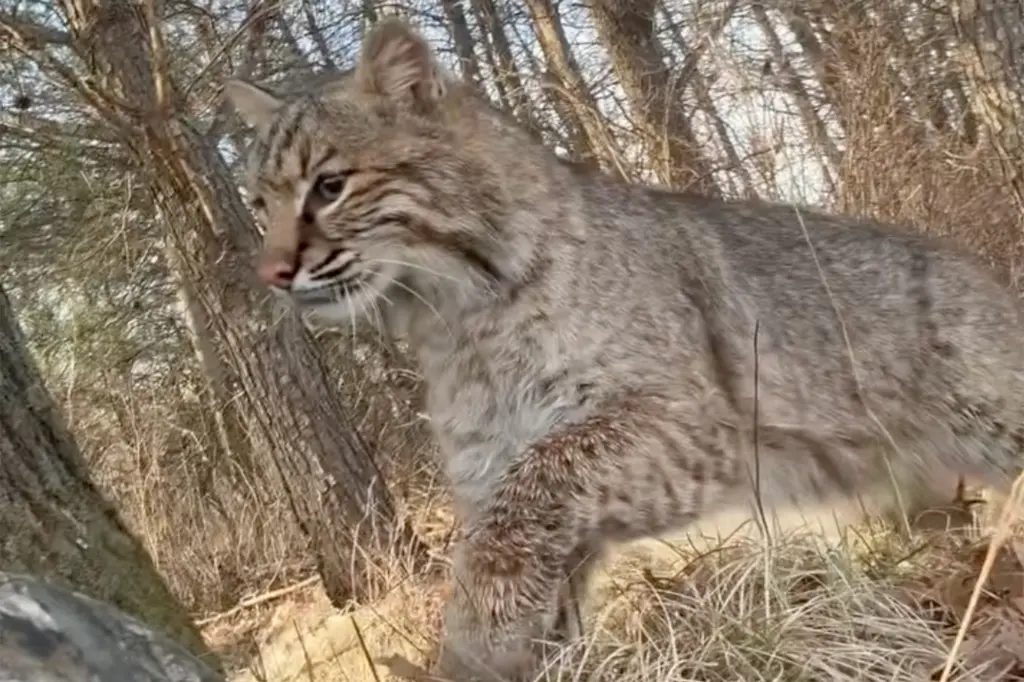
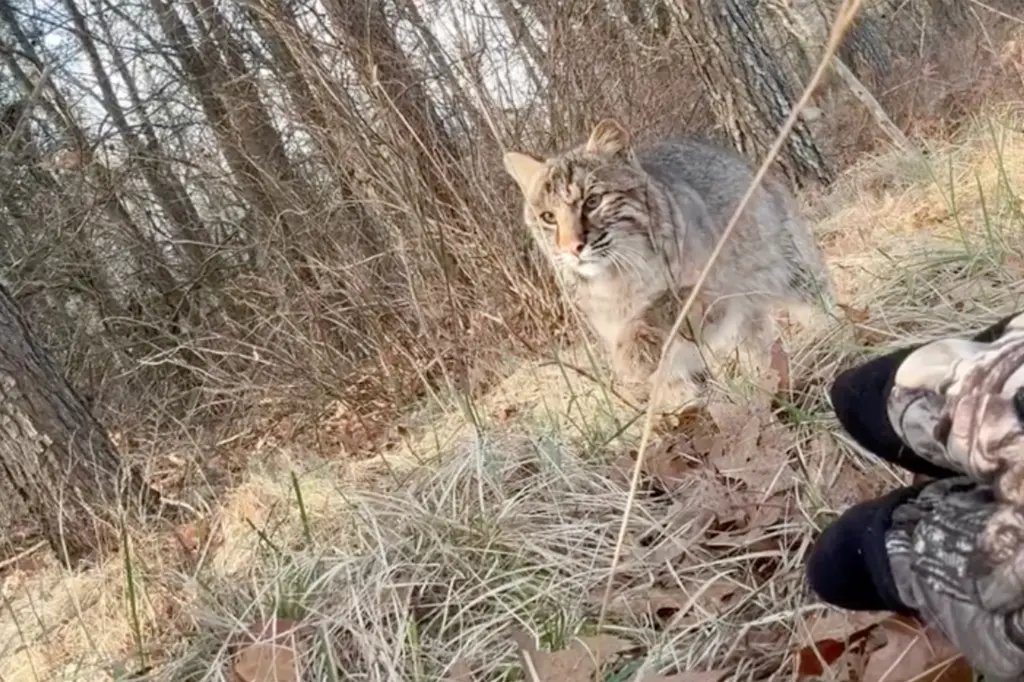
The Attack: When the Hunter Becomes the Hunted
Bobcats are solitary, elusive predators that generally avoid humans. They are found throughout North America, from southern Canada to central Mexico. Adult bobcats typically weigh between 15 and 40 pounds, with males larger than females. They are opportunistic hunters, preying on rabbits, rodents, birds, and occasionally deer.
Turkey calls – which mimic the sounds of a turkey to attract the bird – can sometimes draw in other predators, including bobcats. Wildlife experts note that bobcats are curious animals and may investigate the source of the sound. However, actual physical attacks on humans are extremely rare.
| Bobcat Attack Statistics (since 1990) | Number |
|---|---|
| Human deaths | 26 |
| Maulings (recorded) | 275 |
| Fatalities involving adults | 21 |
| Fatalities involving children | 5 |
Source: Big Cat Rescue
Since 1990, bobcats have been responsible for only 26 human deaths across the United States, with an additional 275 maulings recorded as of 2025. The vast majority of encounters end with the animal retreating before any contact occurs.
“Bobcats are generally not a threat to humans,” said Dr. Lynn Rogers, a wildlife biologist specializing in predator behavior. “They are shy and will usually flee when they detect a person. Attacks like this are extremely rare and often occur when the animal feels cornered or is unusually habituated to humans.”
After the Attack: ‘I Wanted to Kill That Turkey’
Despite the adrenaline and the minor injuries, Bender’s first thought after shaking off the bobcat was not about his safety – it was about the turkey. He said the bird didn’t even scare off during the commotion. He took a shot at 35 yards but missed.
“Found out I’m good at calling cats and turkeys!” Bender joked on his Instagram post, which has since amassed millions of views.
He went to a doctor’s office for a few stitches and a rabies shot (a standard precaution after any wild animal bite). The next morning, he was back in the same spot, undeterred.
“I might have been a little more aware of my surroundings,” he admitted, “but I wasn’t going to let that cat keep me from my turkey.”
What to Do If You Encounter a Bobcat
Wildlife officials recommend the following if you encounter a bobcat in the wild:
- Do not run. Running may trigger the cat’s chase instinct.
- Make yourself appear larger. Raise your arms, open your jacket, and stand tall.
- Make noise. Yell, clap, or use an air horn.
- Back away slowly. Do not turn your back on the animal.
- If attacked, fight back aggressively. Use sticks, rocks, or any available object.
Bender’s quick reaction – shaking the cat off and not panicking – likely prevented more serious injury.
The Viral Video and Public Reaction
Bender’s video has been viewed millions of times across social media platforms. Commenters praised his calm demeanor and his dedication to the hunt.
“This guy is a legend. Gets mauled by a bobcat, checks his arm, then goes back to hunting,” one user wrote.
“Most people would have run home crying. He went to the doctor and then back to the same tree. Respect,” another commented.
Some wildlife advocates, however, expressed concern about hunting practices that inadvertently attract predators. “Turkey calls can draw in bobcats and other animals,” said a spokesperson for the Wisconsin Department of Natural Resources. “Hunters should be aware of their surroundings and take precautions.”
What Happens Next
- Bender’s turkey hunt: He has not yet bagged a bird this season but says he will continue hunting.
- Rabies monitoring: He received a rabies shot as a precaution. Bobcats can carry rabies, though cases are rare.
- Wildlife officials: The Wisconsin DNR has not taken any action regarding the bobcat, which is a protected species in the state.
FAQ: Bobcat Attack on Wisconsin Hunter
Q: Was Carson Bender seriously injured?
A: No. He suffered a few scratches on his shoulder and received medical treatment as a precaution.
Q: How common are bobcat attacks?
A: Extremely rare. Since 1990, there have been only 26 fatal attacks and 275 maulings nationwide.
Q: Why did the bobcat attack?
A: The cat was likely attracted by Bender’s turkey calls and may have felt threatened or confused. Bobcats generally avoid humans.
Q: Did Bender kill the bobcat?
A: No. He shook it off, and it ran away.
Q: Is it legal to hunt bobcats in Wisconsin?
A: Yes, bobcat hunting is legal in Wisconsin with a permit and during designated seasons. This incident occurred during turkey season, and Bender was not targeting the bobcat.
Q: Where can I see the video?
A: The video is posted on Carson Bender’s Instagram page (@carson_.bender) and has been widely shared on social media.