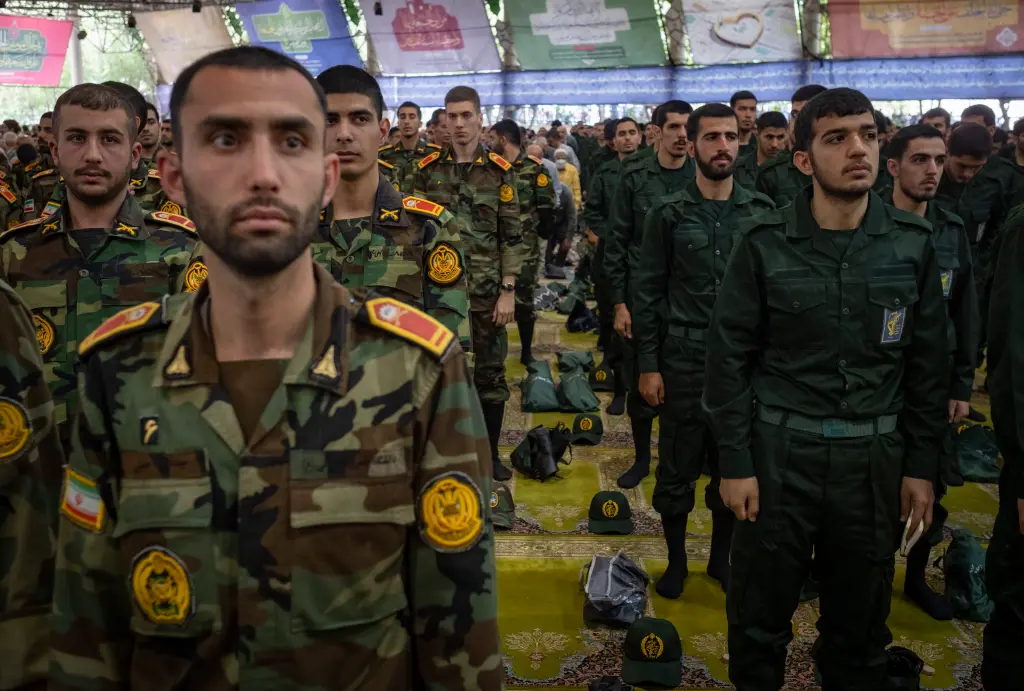
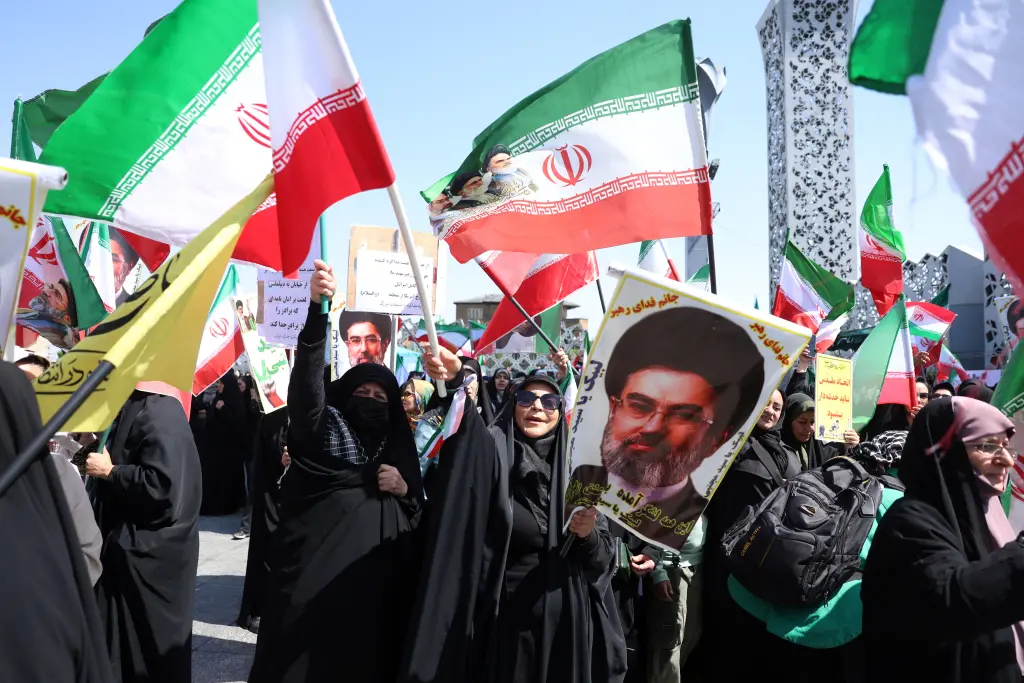
Iran’s hardline Islamic Revolutionary Guard Corps (IRGC) has effectively taken control of the country’s military and diplomatic decision-making, sidelining moderate civilian leaders and scuttling fragile peace negotiations with the United States as the clock ticks toward the expiration of a two-week ceasefire, according to a new assessment by the Washington-based Institute for the Study of War (ISW).
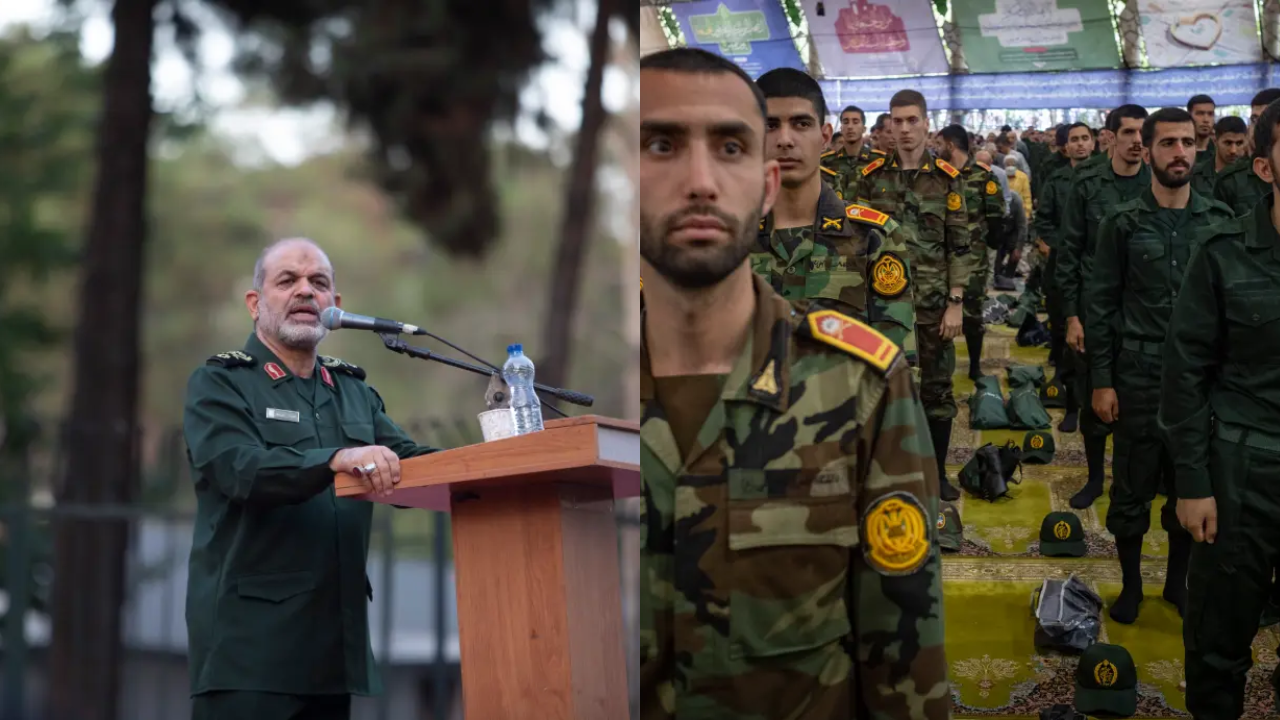
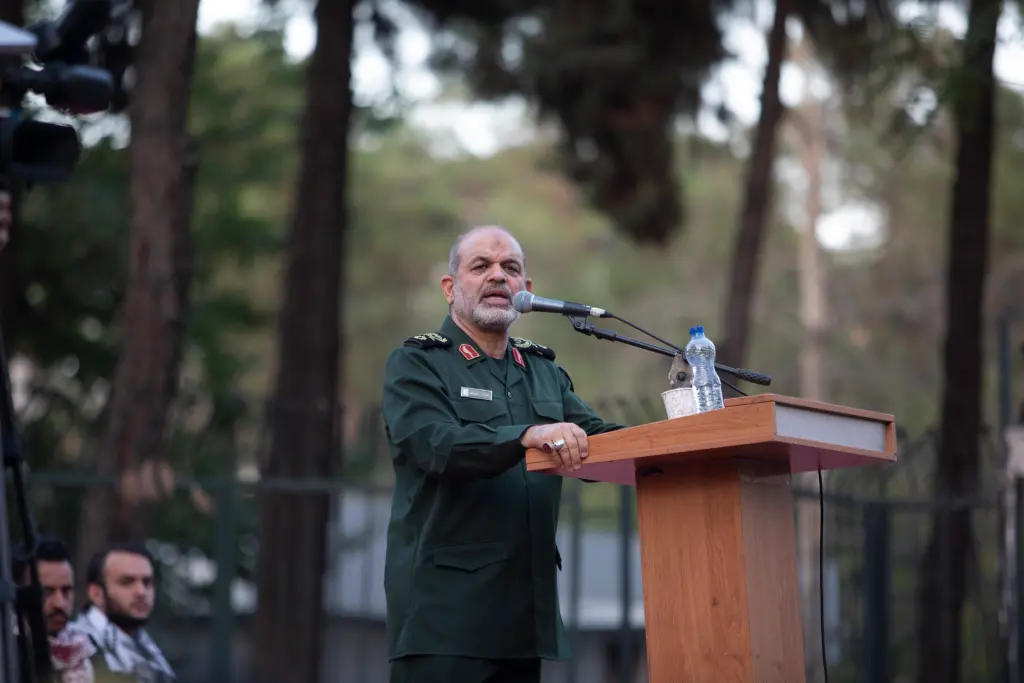
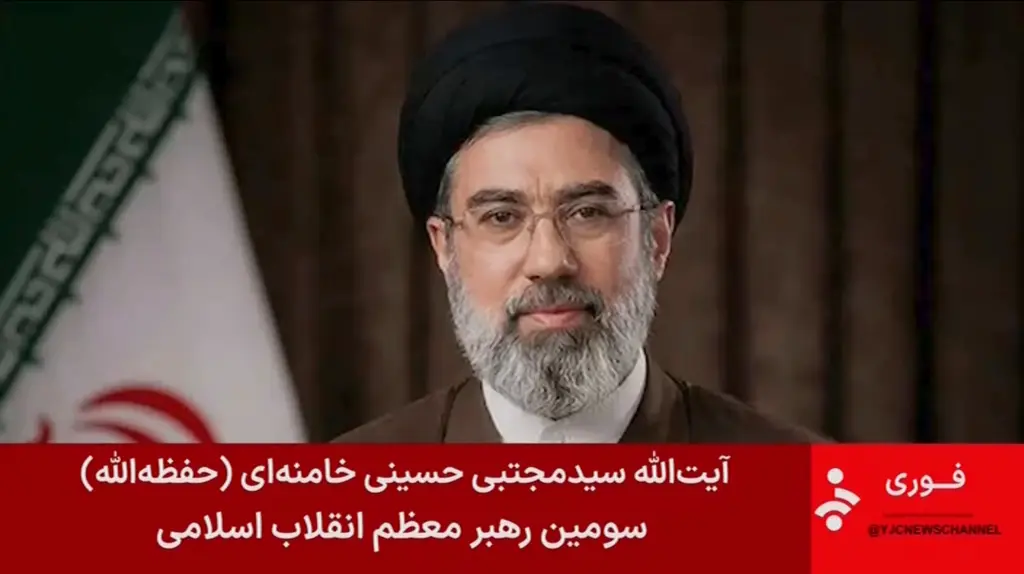
IRGC Commander Maj. Gen. Ahmad Vahidi and members of his inner circle have “secured at least temporary control over not only Iran’s military response in this conflict but also Iran’s negotiating position and approach within the past 48 hours,” the ISW reported on April 18, 2026. The power grab comes as Supreme Leader Mojtaba Khamenei remains out of public view, reportedly injured and isolated since the February 28 U.S.-Israeli airstrike that killed his father and decimated Iran’s senior leadership.
The shift has had immediate and dramatic consequences. Iran has reversed its decision to reopen the Strait of Hormuz — a chokepoint for one-fifth of the world’s seaborne oil — and IRGC gunboats have opened fire on at least three commercial vessels attempting to transit the waterway. Tehran has also refused to participate in the next round of U.S.-mediated peace talks, set to begin Monday in Pakistan, citing “Washington’s excessive demands.”
“The IRGC appears to be controlling Iranian decision-making instead of Iranian political officials who are engaging with the United States in negotiations, particularly Foreign Affairs Minister Abbas Araghchi,” the ISW noted.
The Power Grab: How the IRGC Took Control
The IRGC’s ascendancy has been building for weeks, but the final consolidation appears to have occurred over the weekend of April 18-19. According to the ISW, Vahidi and his allies now dominate both the military chain of command and the diplomatic apparatus, effectively sidelining Iran’s elected civilian government.
Key figures in the new power structure include:
| Figure | Role | Status |
|---|---|---|
| Maj. Gen. Ahmad Vahidi | IRGC Commander-in-Chief | De facto decision-maker on war and peace |
| Mohammad Bagher Zolghadr | Supreme National Security Council secretary; IRGC veteran | Vahidi’s key ally; sent to supervise negotiating delegation |
| Hossein Taeb | Former IRGC Intelligence Organization chief; longtime Mojtaba confidant | Part of supreme leader’s inner circle |
| Mojtaba Khamenei | Supreme Leader (nominal) | Remains out of public view; reportedly injured and isolated |
The IRGC’s grip extends beyond the military. According to reports, Vahidi has blocked presidential appointments, established a security perimeter around the core of power, and pushed for the appointment of Mojtaba Khamenei as supreme leader — a move that has effectively handed full control of the country to the IRGC and permanently sidelined civilian institutions.
“The IRGC is one of the most dominant political, security, economic, and ideological actors in Iran,” the ISW noted in a March 4, 2026 report.
The Diplomatic Fallout: Araghchi Sidelined, Talks Collapse
Foreign Minister Abbas Araghchi, once considered a key interlocutor with the United States, has been publicly humiliated and stripped of his authority. According to multiple sources, Vahidi has called Araghchi an “idiot” on state media and has taken direct control of the negotiating team.
Zolghadr was specifically dispatched to the negotiating delegation to ensure compliance with IRGC and supreme leader directives. The ISW reported that Zolghadr sent a complaint to senior IRGC leaders — “almost certainly including Vahidi” — accusing Araghchi of exceeding his mandate by expressing flexibility regarding Iran’s support for the “Axis of Resistance.”
“Zolghadr’s anger caused senior leaders in Tehran, including Hossein Taeb, to call the negotiating delegation back to Tehran,” the ISW wrote.
The result has been a complete breakdown in diplomatic momentum. On April 13, Araghchi announced that talks in Islamabad had ended in a stalemate, writing on X: “In intensive talks at the highest level in 47 years, Iran engaged with the US in good faith to end the war. But when just inches away from ‘Islamabad MoU’, we encountered maximalism, shifting goalposts…”
Now, with the IRGC in charge, Tehran has refused to participate in the next round of talks entirely.
The Strait of Hormuz: Gunboats, Mines, and Global Chaos
The IRGC’s newfound control has been most visibly demonstrated in the Strait of Hormuz. On April 17, Araghchi had announced an agreement to reopen the strait to commercial traffic, a key step toward de-escalation. Within 24 hours, the IRGC reversed that decision.
According to multiple maritime security sources:
- At least three commercial vessels have been attacked by IRGC gunboats since the strait was re-closed.
- Two Iranian gunboats opened fire on a tanker in the strait, the UK Maritime Trade Operations (UKMTO) reported.
- A container ship was also targeted and sustained damage.
- Iran has declared the strait closed to all non-Iranian traffic, regardless of type or nationality.
The IRGC’s fast attack ships remain Iran’s primary naval force after U.S.-Israeli airstrikes sank more than 150 vessels of Tehran’s conventional navy. The IRGC has also reportedly laid mines in the waterway — and Tehran has claimed it has lost track of some of their locations.
“The IRGC Navy has attacked at least three vessels attempting to transit the strait since it reinstated ‘control’ over the strait on April 18,” the ISW reported.
The Supreme Leader’s Silence: Where Is Mojtaba Khamenei?
Compounding the crisis is the mysterious absence of Supreme Leader Mojtaba Khamenei. Since the February 28 airstrike that killed his father and left him reportedly maimed (losing a leg), the new supreme leader has not been seen in public.
The IRGC has reportedly established a “military council” of senior officers that controls the flow of information between President Masoud Pezeshkian and the supreme leader. Reports suggest that Mojtaba has lost control of the money and the apparatus of government, left only with “bayonets”.
“This has led to a new power struggle. However, with Mojtaba staying unseen since the death of Ali Khamenei — which has sparked questions around his health — the IRGC is now reportedly controlling the flow of information between Pezeshkian and the Supreme Leader,” The Week reported.
On April 18, Mojtaba did post a message on his Telegram channel, declaring that Iran’s navy is prepared to inflict “new bitter defeats” on its enemies. But the absence of a public appearance speaks volumes.
The Nuclear Dimension: A Program Set Back, but Not Destroyed
The IRGC’s hardline posture complicates efforts to address Iran’s nuclear program. According to multiple assessments, U.S. and Israeli strikes in 2025 and 2026 have “substantially” set back Tehran’s nuclear ambitions — but not dismantled them.
“Overall, this conflict has set back Iran’s nuclear program substantially,” said Spencer Faragasso of the Institute for Science and International Security, a U.S. think tank that monitors Iran’s nuclear program.
However, intelligence assessments warn that Iran’s breakout period — the time needed to produce enough weapons-grade uranium for a nuclear device — has been reduced to “just a few weeks or less”. The IRGC, now in control, is unlikely to accept any deal that would require dismantling its nuclear infrastructure.
The IRGC’s Economic Empire: Sanctions, Oil, and Cryptocurrency
The IRGC’s power is not limited to military and political spheres. The organization controls vast swaths of Iran’s economy, including oil, gas, telecommunications, and consumer goods distribution. Even as U.S. sanctions have intensified, the IRGC has adapted:
- Iran has doubled its oil exports since the start of “Operation Epic Fury,” sustaining flows of between 2.4 million and 2.8 million barrels per day.
- The IRGC now accepts cryptocurrency as payment for transit through the Strait of Hormuz, as well as Chinese yuan routed through Kunlun Bank.
- Tehran is demanding the release of an estimated $30 billion in frozen oil and gas revenues as part of any deal to reopen the strait.
The IRGC’s economic power gives it both the means and the motive to prolong the conflict. Intelligence sources suggest the Guard fears that any diplomatic “thaw” orchestrated by Araghchi would diminish their relevance and funding in a post-Khamenei Iran.
“The IRGC is pushing toward a Hiroshima moment, but Trump needs a non-Hiroshima solution,” one analyst wrote. “The political authorities may want the war to end, but the IRGC does not, and it’s calling the shots”.
What Happens Next: Ceasefire Expiration and the Path to War
The two-week ceasefire between the U.S.-led coalition and Iran expires on Tuesday, April 21. With the IRGC in control and Tehran refusing to participate in peace talks, the likelihood of an extension appears slim.
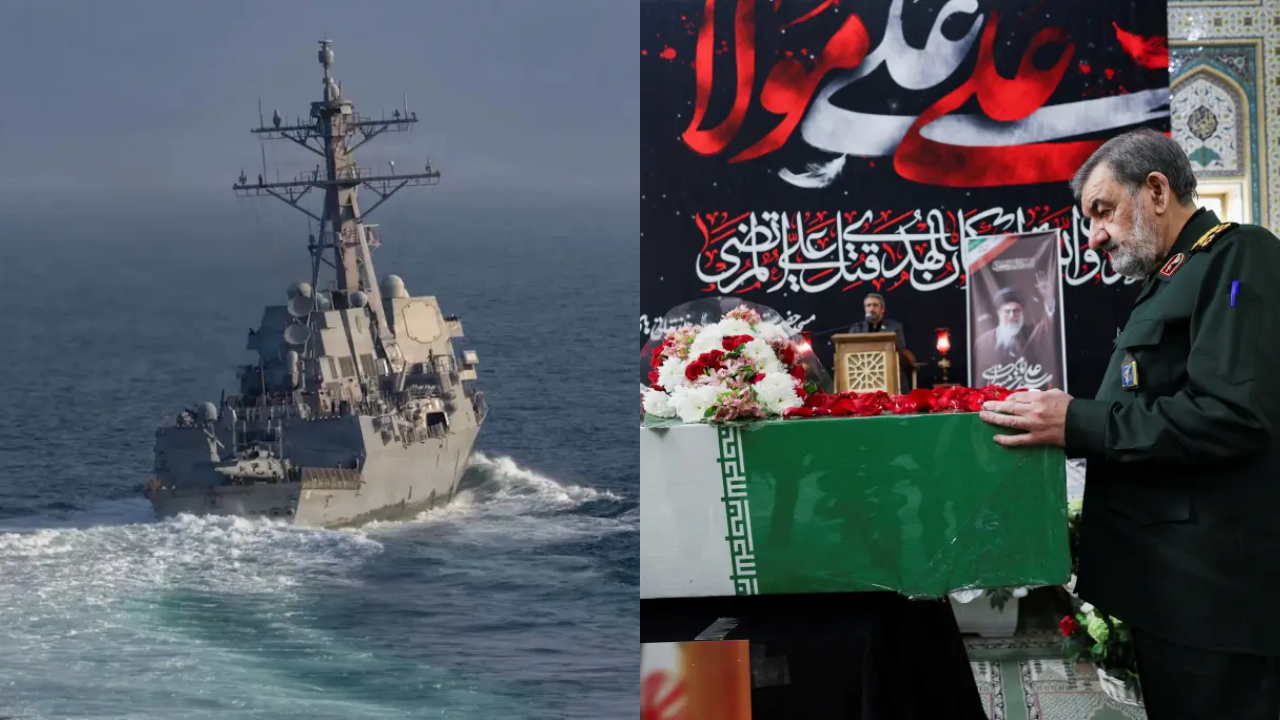
President Trump has warned that if no deal is reached, he will order the bombing of “energy infrastructure and bridges in Iran.” The U.S. naval blockade of Iranian ports remains in full force, and the USS Spruance has already disabled and seized one Iranian cargo ship that attempted to breach it.
The ISW assessment concludes that Vahidi and the IRGC are now above Araghchi and Parliament Speaker Mohammad Bagher Ghalibaf in the decision-making hierarchy, despite their nominal positions.
“This puts Vahidi and the IRGC above Araghchi and Ghalibaf, who, despite their anti-American rhetoric, are considered moderates,” the ISW noted. “The state of affairs undermines Araghchi and Ghalibaf’s negotiations with the US as they lack ‘leverage or formal executive authority to shape decision-making.’”
With no date set for further negotiations and the IRGC in full control of both the military and diplomatic levers, the region is bracing for what comes next.
FAQ: IRGC Takeover of Iran
Q: What is the Islamic Revolutionary Guard Corps (IRGC)?
A: A powerful Iranian military and political organization that controls the country’s missile and drone arsenals, manages the “Axis of Resistance,” and dominates the Iranian economy. It is one of the most powerful actors in the Islamic Republic.
Q: Who is Maj. Gen. Ahmad Vahidi?
A: The commander-in-chief of the IRGC. According to the ISW, he has “secured at least temporary control” over Iran’s military response and negotiating position.
Q: What happened to the peace talks?
A: Iran has refused to participate in the next round of U.S.-mediated talks, set for April 20 in Pakistan. The IRGC has sidelined Foreign Minister Abbas Araghchi, who had been leading the negotiations.
Q: Why is the Strait of Hormuz closed?
A: The IRGC reversed a decision to reopen the strait and has attacked at least three commercial vessels. Iran demands the release of $30 billion in frozen assets and an end to the U.S. blockade.
Q: Where is Supreme Leader Mojtaba Khamenei?
A: He has not been seen in public since the February 28 airstrike that killed his father. Reports indicate he was injured and may have lost a leg. The IRGC now controls access to him.
Q: What happens when the ceasefire expires?
A: The two-week truce ends April 21. Trump has threatened to bomb Iranian infrastructure if no deal is reached. With the IRGC in control, a return to full-scale hostilities appears likely.