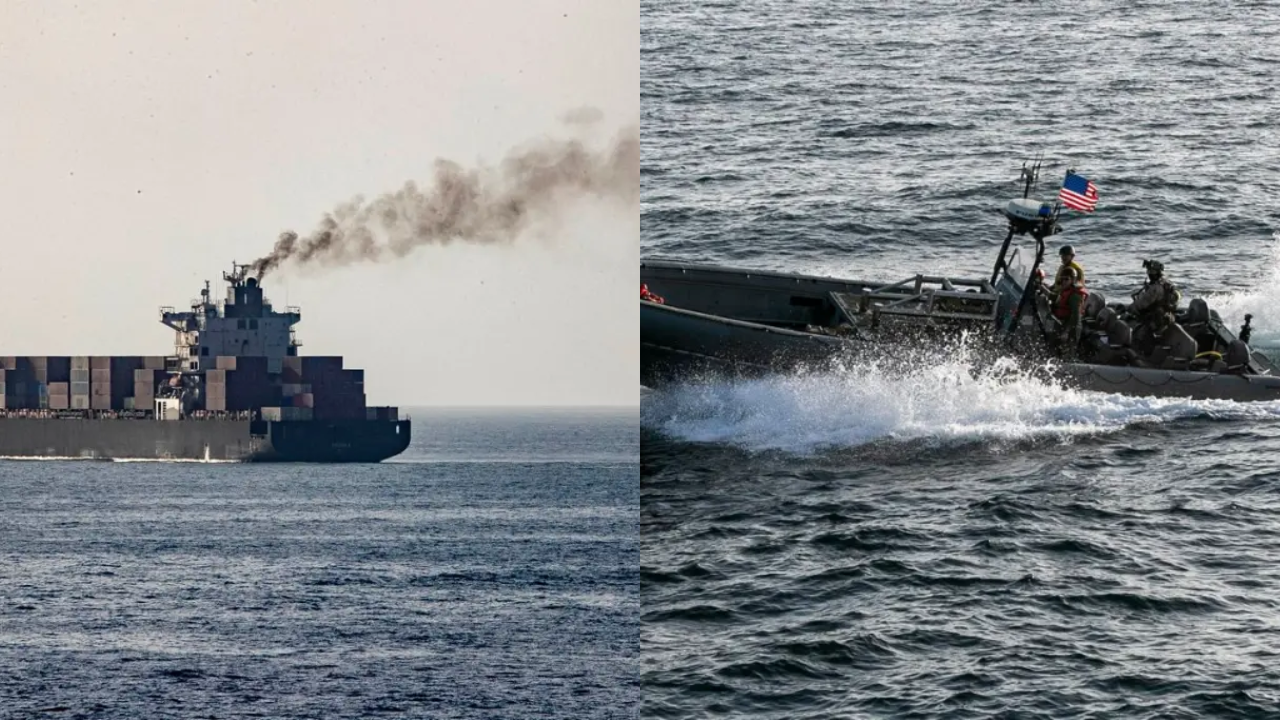
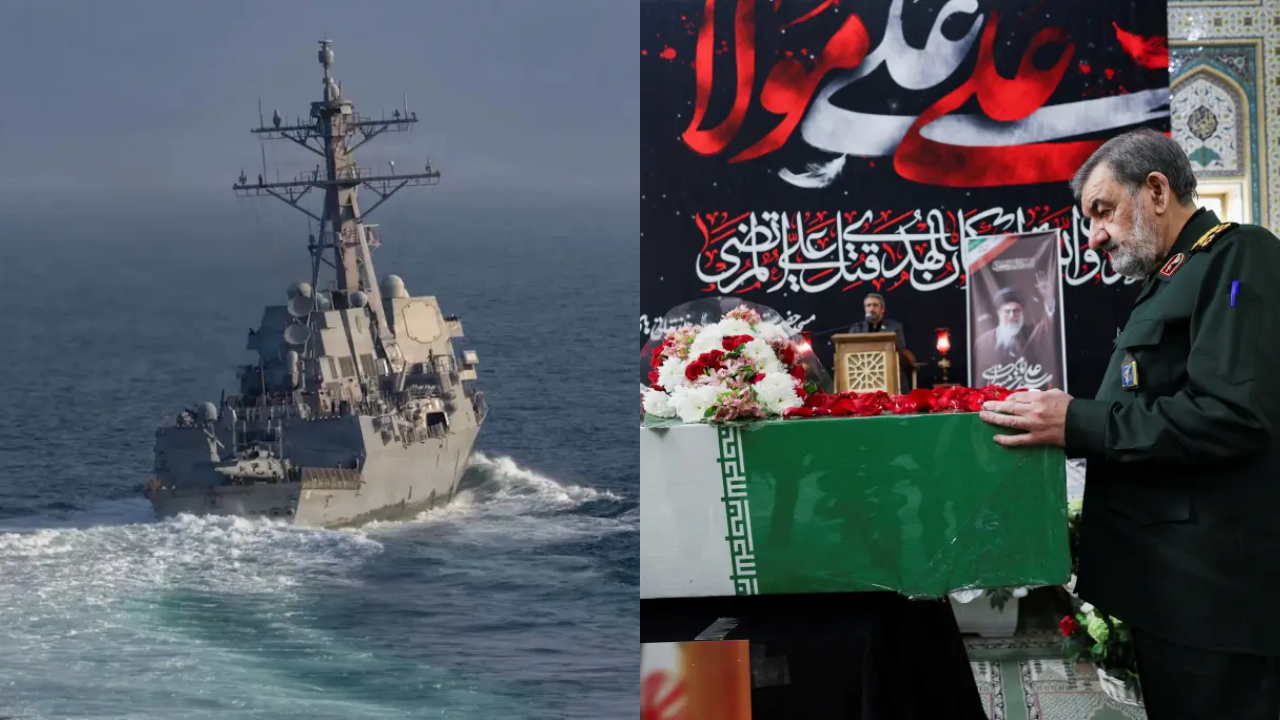
A top military adviser to Iran’s supreme leader has issued a stark warning to the United States: American warships policing the Strait of Hormuz will be “sunk by our first missiles.” In the same breath, the hardliner provocatively claimed a US ground invasion would be “great” — because Iran would capture “thousands of hostages” and demand “$1 billion” per captive.
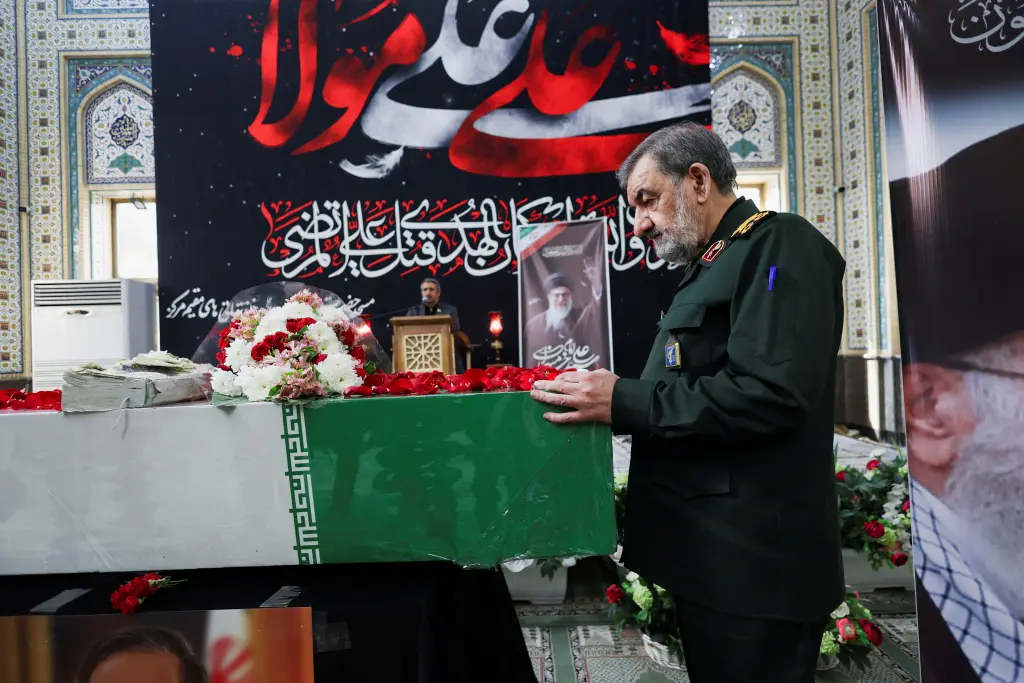
Mohsen Rezaee, a former commander-in-chief of the Islamic Revolutionary Guard Corps (IRGC) who was appointed as Supreme Leader Mojtaba Khamenei’s top military adviser last month, made the comments on Iranian state television Wednesday, as the US naval blockade of Iranian ports entered its third day .
“Mr. Trump wants to become the police of the Strait of Hormuz. Is this really your job? Is this the job of a powerful army like the US?” Rezaee taunted, dressed in his military uniform.
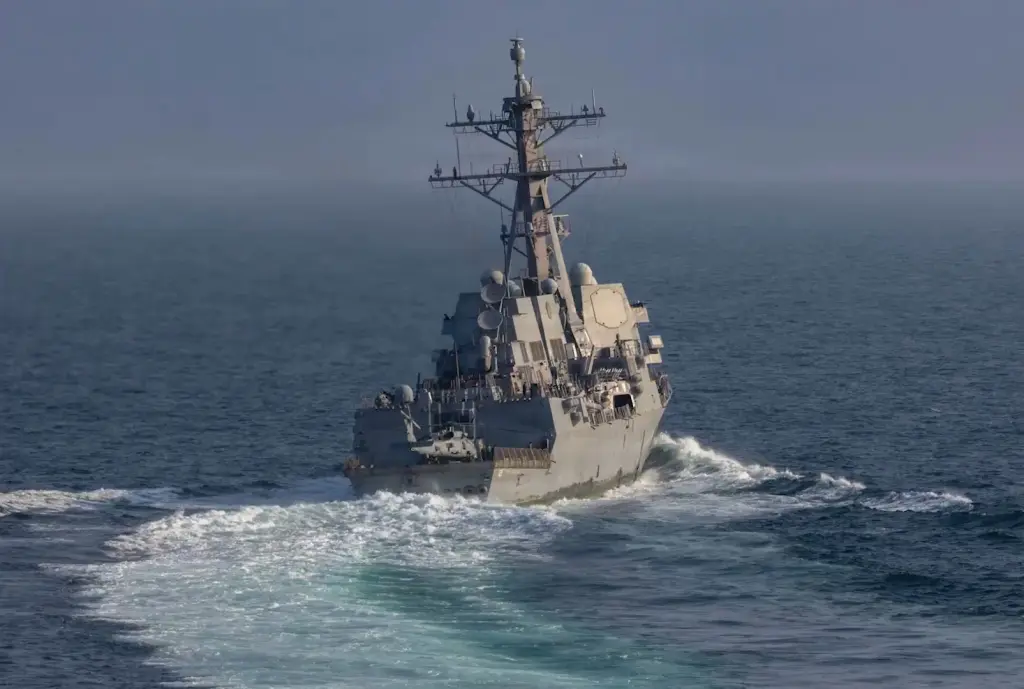
“These ships of yours will be sunk by our first missiles and have created a great danger for the US military. They can definitely be exposed to our missiles and we can destroy them,” he added .
The Hostage Threat: ‘A Billion Dollars Each’
In perhaps the most striking part of the interview, Rezaee said he would welcome a US ground invasion — not as a defeat, but as a financial opportunity.
“It would be great if the United States launched a ground invasion of Iran, as we would take thousands of hostages and then for each hostage we would get a billion dollars,” he told state TV .
The statement reflects a long-standing Iranian strategy of using captured personnel or citizens as bargaining chips. Since the war began on February 28, 2026, Iran has reportedly detained several foreign nationals, though the regime has not provided official numbers.
Rezaee also made clear his opposition to extending the fragile two-week ceasefire that took effect last week:
“I am not in favor of extending the ceasefire at all, and this is a personal view,” he said .
The US Naval Blockade: What’s Happening
The escalating rhetoric comes as the US military enforces a naval blockade of Iranian ports, which began Monday, April 13. According to US Central Command (CENTCOM):
- 10 Iranian vessels have been turned back so far
- No ships have breached the blockade since it was established
- The blockade applies to “vessels of all nations entering or departing Iranian ports and coastal areas”
However, tracking company TankerTrackers has contradicted CENTCOM’s claims, reporting that satellite imagery shows several tankers have bypassed the blockade and are now in Iranian waters .
President Trump announced the blockade after weekend peace talks in Pakistan failed to produce an agreement. The US has also warned that any Iranian “fast attack ships” approaching the blockade will be “BLOWN TO HELL” .
US Troop Surge: Thousands More Deployed
The Pentagon is significantly increasing its military presence in the Middle East, according to The Washington Post .
| Deployment | Number of Troops | Expected Arrival |
|---|---|---|
| USS George H.W. Bush carrier strike group | ~6,000 | Already en route |
| Boxer Amphibious Ready Group & 11th Marine Expeditionary Unit | ~4,200 | End of April |
| Total additional troops | ~10,200 | — |
These forces will join the USS Abraham Lincoln and USS Gerald Ford, which are already in the region. About 50,000 US troops have been involved in the military campaign against Iran since the war began on February 28 .
US Central Command spokesman Capt. Tim Hawkins reported that 399 US service members have been wounded in the Iran war, with 13 killed in combat .
Rezaee: A Hardliner’s Hardline
Mohsen Rezaee is no ordinary Iranian official. He headed the IRGC from 1981 to 1997 and has long been regarded as a hardliner even within the Revolutionary Guards . His appointment last month as Supreme Leader Khamenei’s military adviser signals a shift toward more aggressive rhetoric — and potentially more aggressive action.
Key points from his state TV interview:
- On the blockade: “Just as the United States suffered a historic defeat in trying to open the Strait of Hormuz, it is also doomed to fail in the naval blockade”
- On missile capabilities: “Our launchers are now locked on the warships, and we will sink them all”
- On the ceasefire: Not in favor of extending it
- On ground invasion: Would be “great” because of hostage-taking opportunities
The Fragile Ceasefire
A two-week ceasefire between the US and Iran took effect last week, pausing the intense fighting that began on February 28. The ceasefire followed 21 hours of negotiations in Pakistan, which ended without a formal agreement .
The ceasefire is set to expire on April 22. Neither side has indicated whether talks will resume before then, though a second round of negotiations in Pakistan is reportedly being discussed .
UN Secretary-General Antonio Guterres has urged renewed talks, warning that violations of international law are fueling instability and mistrust .
President Trump, however, sounded an optimistic note Wednesday:
“The war is very close to being over,” Trump told FOX Business .
Iran’s Leverage: The Strait of Hormuz
The Strait of Hormuz is a critical chokepoint for global oil supplies — about 20% of the world’s petroleum transits through the waterway . Iran has effectively closed the strait to most shipping since the war began, causing global oil prices to skyrocket approximately 50% .
Iran’s Revolutionary Guards have warned that “no port in the Persian Gulf and the Sea of Oman will be safe” if its own ports are threatened .
Expert Analysis: A Dangerous Gamble
Military and geopolitical experts have expressed concern about the blockade’s long-term sustainability.
Dana Stroul, a former senior Pentagon official now at The Washington Institute for Near East Policy, told Army Times:
“Trump wants a quick fix. The reality is, this mission is difficult to execute alone and likely unsustainable over the medium to long-term” .
Retired Adm. Gary Roughead, a former chief of US naval operations, warned:
“I honestly believe that if we begin to do it, that Iran will have some kind of a reaction” .
Yu Jihoon, a research fellow at the Korea Institute for Defense Analyses, noted that an extended blockade could strain US Navy capabilities elsewhere in the world:
“Given that the US Navy has already been dispersing its operations across the Middle East, Indo-Pacific and Europe, the longer the blockade lasts, the more burdensome it may be for other theater operations” .
What Happens Next
- Ceasefire expiration: The current truce ends April 22. Rezaee’s opposition to extension raises concerns about renewal.
- Potential second talks: Pakistan is reportedly working to bring both sides back to the negotiating table .
- Blockade enforcement: The US will continue turning back vessels. Any Iranian military response could trigger renewed hostilities.
- Troop buildup: With over 10,000 additional troops en route, the US is preparing for a prolonged confrontation.
FAQ: Iran-US Strait of Hormuz Crisis
Q: Who is Mohsen Rezaee?
A: A former IRGC commander-in-chief (1981-1997) and current top military adviser to Supreme Leader Mojtaba Khamenei. He is considered an extreme hardliner.
Q: What did he threaten?
A: That Iran would sink American warships with missiles, that the US blockade would fail, and that a US ground invasion would be “great” because Iran would take thousands of hostages for $1 billion each.
Q: Is the ceasefire still holding?
A: Yes, a two-week ceasefire is in place until April 22. However, Rezaee said he personally opposes extending it.
Q: How many US troops are in the region?
A: About 50,000 US troops are involved in the campaign. An additional 10,000+ are being deployed, including 6,000 aboard the USS George H.W. Bush.
Q: Has the blockade stopped all Iranian shipping?
A: CENTCOM says 10 vessels have been turned back and none have breached the blockade. However, independent trackers say some tankers have bypassed it.
Q: What started the war?
A: The US and Israel launched military action against Iran on February 28, 2026. The conflict has involved airstrikes, missile attacks, and now a naval blockade.
Sources: New York Post, Anadolu Ajansı, PressTV, Xinhua, The New Indian Express, CNN, The Jerusalem Post, Hindustan Times, Army Times, US Central Command. This article was published April 16, 2026.