
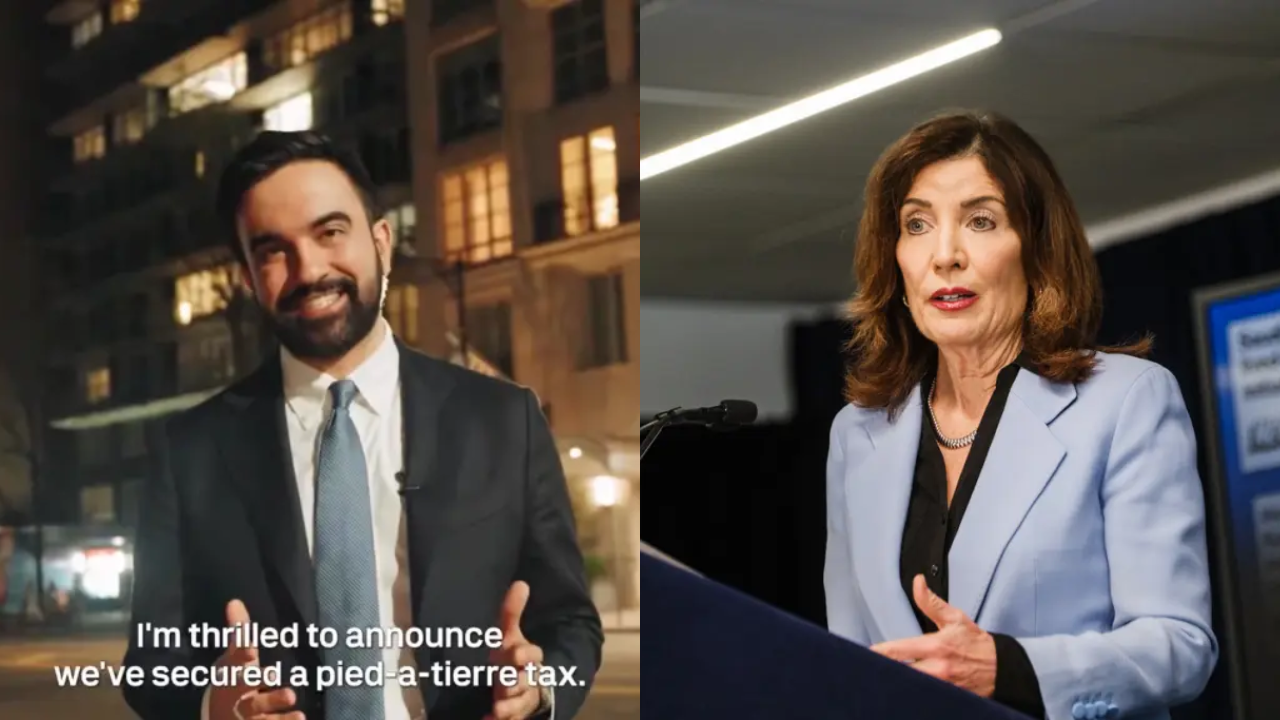
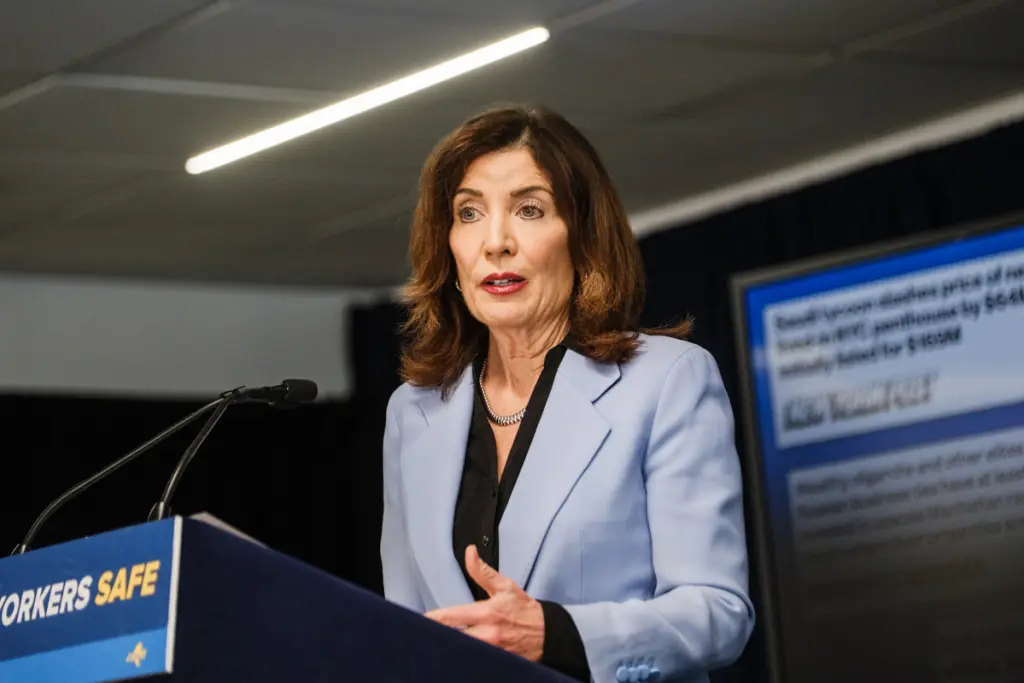
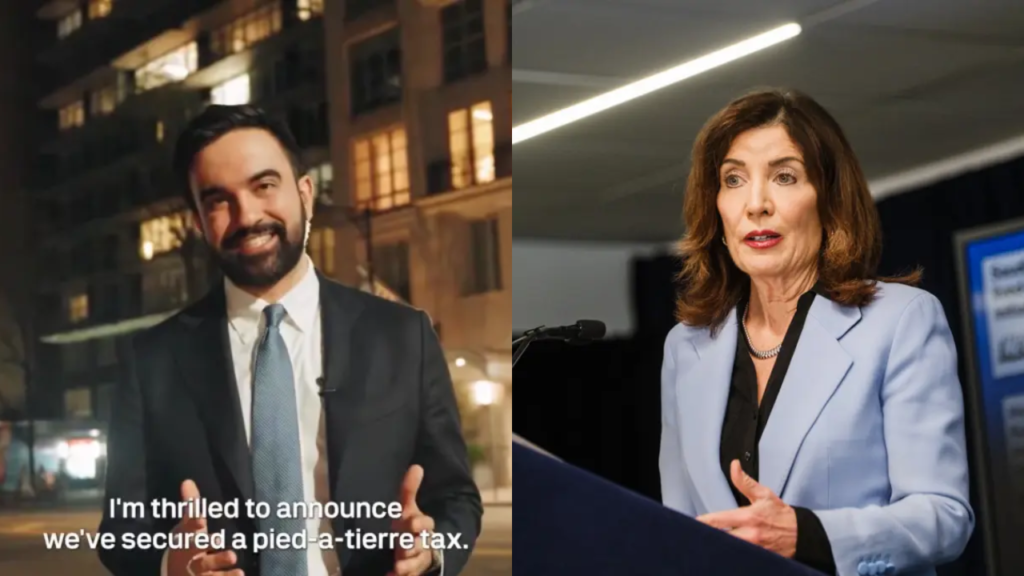
Gov. Kathy Hochul is facing fierce backlash after abruptly endorsing a pied-à-terre tax on wealthy New Yorkers — a direct reversal of her repeated promises not to raise taxes — while Mayor Zohran Mamdani and his Democratic Socialists of America allies gleefully claim credit for the victory.
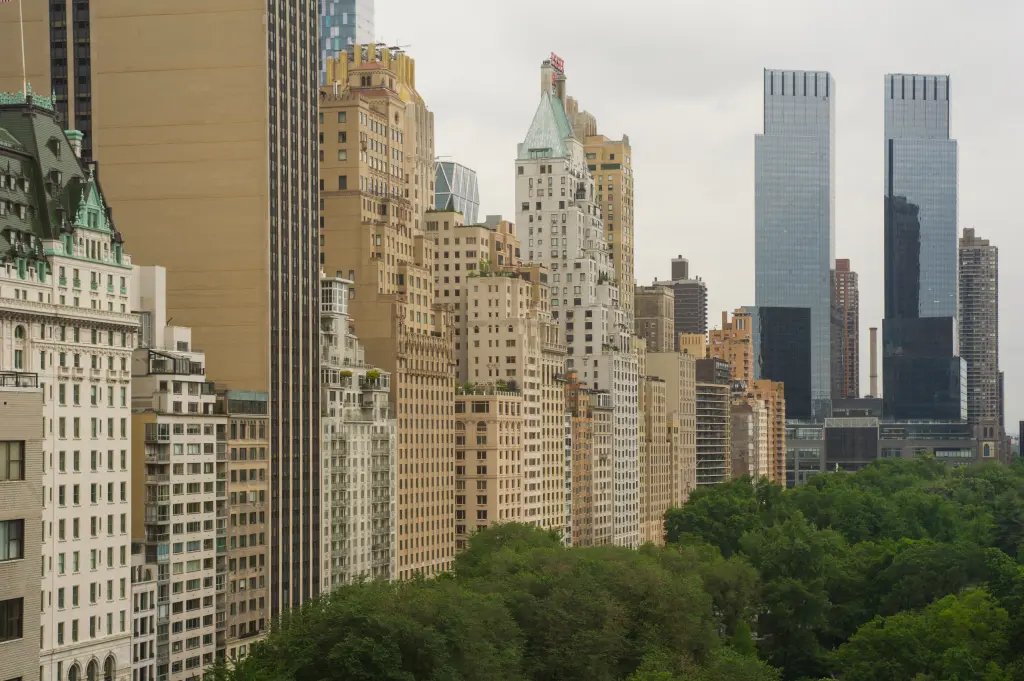
The proposed surcharge would target roughly 13,000 secondary homes in New York City valued at $5 million or more, generating an estimated $500 million annually to help close the city’s projected $5.4 billion budget deficit. But critics on both the right and the real estate industry say the move will backfire, driving wealthy residents and investment out of the state.


Hochul’s About-Face: From “No New Taxes” to New Surcharge
Just months ago, Hochul was adamant. In a January 16 interview on Fox 5, she said:
“I don’t believe in raising taxes for the sake of raising taxes. What is served by that? We have high taxes already predating my time. We have enough revenues to do what we want to do and what we need to do to support our state.”
On March 11, at a Politico forum, she doubled down, saying she wanted to “make sure we are smart about having a system in place where it’s not just taxing for the sake of taxing.” At that same event, she implored wealthy New Yorkers who had fled the city to return and help pad government coffers.
Now, just weeks later, she has proposed a new tax on luxury second homes — a policy long championed by the Democratic-controlled state Legislature and by Mayor Mamdani’s DSA faction.
Hochul defended the shift, saying in a statement: “If you can afford a $5 million second home that sits empty most of the year, you can afford to contribute like every other New Yorker.”
But critics say the reversal is a transparent political move to appease the far left as she faces a tough re-election battle.
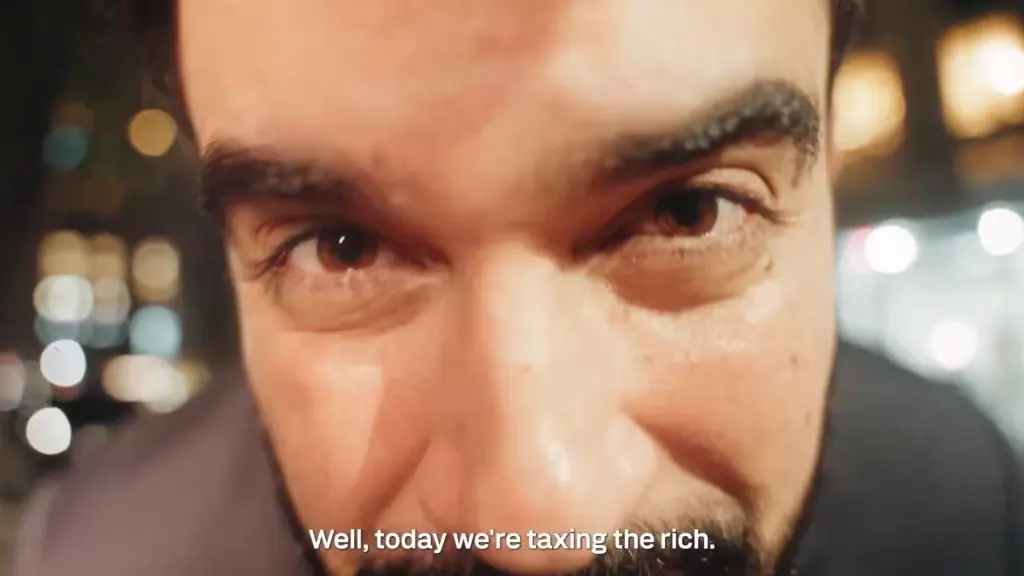
Mamdani and DSA: “We’re Taxing the Rich”
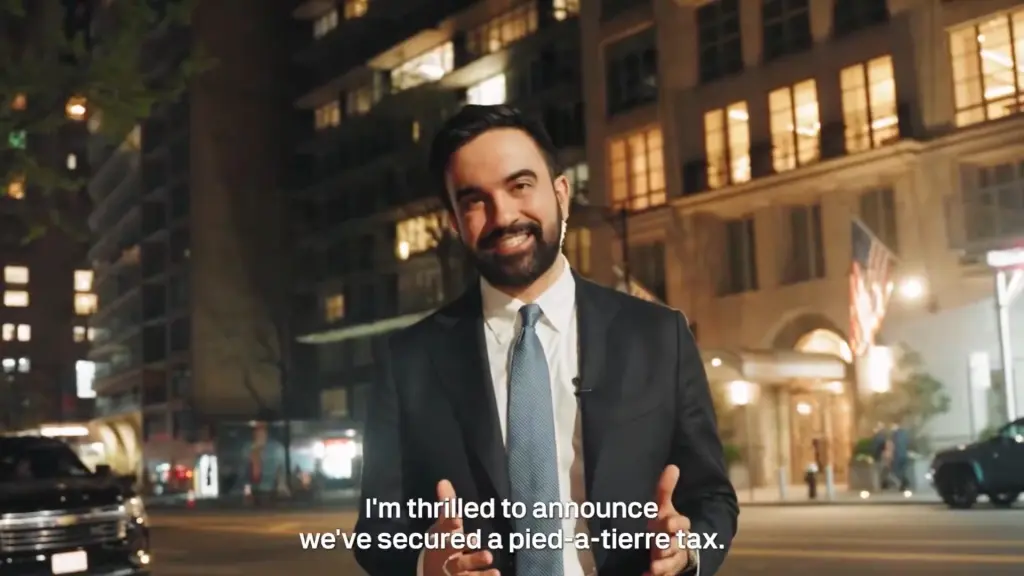
Mayor Mamdani, who took office in January 2026 on a platform of soaking the wealthy, was quick to claim victory. Hours after Hochul’s announcement, he released a slickly produced video filmed outside billionaire investor Ken Griffin’s $238 million Manhattan penthouse.
“When I ran for mayor, I said I was gonna tax the rich. Well, today, we’re taxing it,” Mamdani boasted. “I’m thrilled to announce we’ve secured a pied‑à‑terre tax.”
He did not mention Hochul in the video, though he later thanked her in a written statement included in the governor’s press release.
The city’s DSA chapter was equally triumphant. Co-chair Gustavo Gordillo said:
“The fact that Governor Hochul has made this concession when she’s been adamantly against taxes on the rich shows the strength of our movement. Mayor Mamdani’s campaign raised expectations for what working people can win when we organize.”
Since taking office, Mamdani has proposed a whopping $23 billion in combined tax increases, including an income tax hike on those making $1 million or more and a corporate tax increase. The pied-à-terre tax — a relative “peanuts” measure compared to his broader agenda — is being framed by the mayor as a down payment on his larger goals.
Republican Outrage: “She Promises One Thing and Does Another”
Republicans — including those running against Hochul in the 2026 gubernatorial election — pounced on the flip-flop.
Nassau County Executive Bruce Blakeman, the Republican candidate, said:
“Kathy Hochul’s ‘No Tax Hike’ promise has expired faster than the families fleeing New York’s affordability crisis.”
Rep. Nicole Malliotakis (R-NY) added:
“Speaking out of one side of her mouth, Hochul tells those who fled New York to come back but out of the other side, she’s plotting ways to tax New Yorkers even more.”
State Assemblyman Michael Tannousis (R-Staten Island/Brooklyn) compared the move to Hochul’s reversal on congestion pricing — when she paused the new fee on drivers entering Manhattan until after the 2024 election:
“She promises one thing and does another. This is a glimpse of what New York residents face if Hochul is re-elected. Don’t be fooled.”
Staten Island Borough President Vito Fossella warned:
“This latest money grab will repeat the same pattern that has driven residents, businesses and investment out of New York for years. Targeting and punishing wealth does not fix the problem. However, reducing runaway spending, and providing incentives that expand the tax base, do.”
Real Estate Industry Fights Back
The Real Estate Board of New York (REBNY), one of the most powerful industry groups in the state, issued a forceful condemnation.
President James Whelan said:
“This proposal overpromises revenue while ignoring the real economic damage it would cause. A tax like this cannot be adopted without causing significant economic harm to everyday New York City residents.”
One real estate insider called it “a punitive tax for a beneficial outcome,” noting:
“Pied-à-terres pay property taxes, employs people and use very few city services. We are lucky we have them; we shouldn’t discourage them.”
Another industry source argued the tax “will bring a halt to tens of billions of dollars in new construction, spending and tax revenue over the next decade.” Big spending from pied-à-terre owners would also dry up, “hurting retail, theater, and cultural institutions.”
Currently, a 4,000-square-foot Chelsea condo on the market for $5 million already pays $84,000 annually in property taxes. A 2,600-square-foot Midtown condo at the same price pays $42,000. The new surcharge would be on top of those bills.
How the Tax Would Work
While exact rates have not been finalized, sources say the pied-à-terre tax would be structured as a scale based on property sale values:
| Property Value | Expected Surcharge (Annual) |
|---|---|
| $5 million – $15 million | To be determined (moderate) |
| $15 million – $25 million | Higher rate |
| $25 million+ | Highest rate |
Homes listed as vacant or vacation would be targeted. Rental units and owner-occupied primary residences would be exempt.
The governor’s office hopes the tax will raise at least $500 million annually, though critics say enforcement will be difficult and revenue projections are optimistic.
Budget Context: A $5.4 Billion Deficit
The pied-à-terre tax is part of Hochul’s proposal to help close New York City’s $5.4 billion budget gap. In February, she already agreed to give the city $1.5 billion in aid.
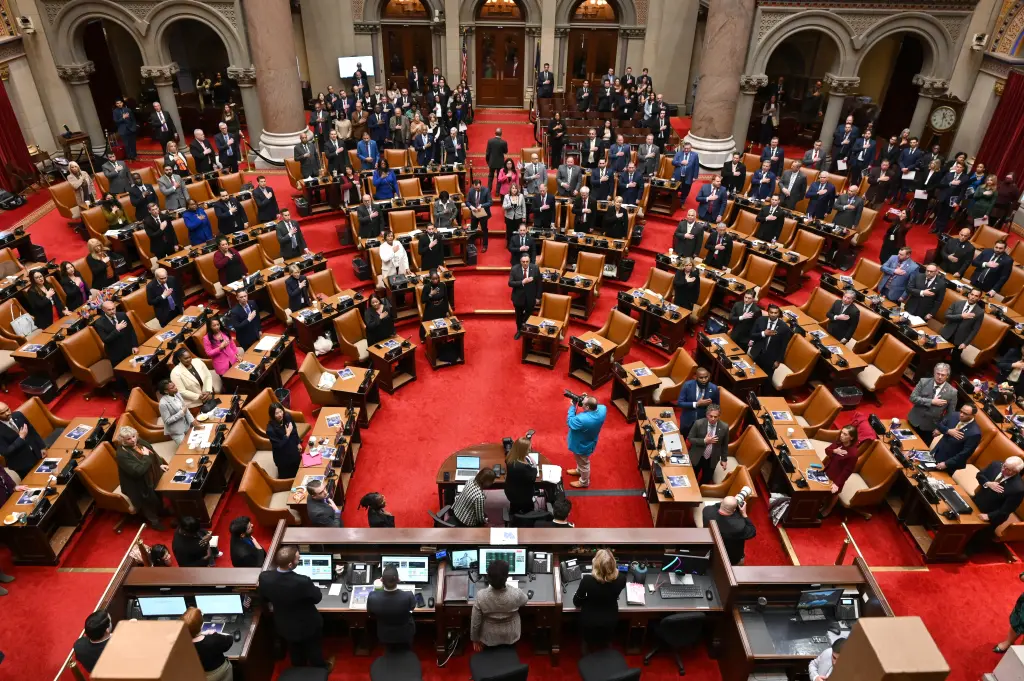
The state budget is now more than two weeks overdue, with negotiations ongoing. Hochul has insisted she is not considering income tax or corporate tax hikes — only the pied-à-terre surcharge.
Citizens Budget Commission President Andrew Rein offered a cautious take:
“While a pied-a-terre tax is less competitively damaging than other proposals, it’s very hard to design and implement well and ultimately, it’s no replacement for holistic property tax reform. With this proposal, there should be an end to the discussion of additional tax increases and a shift back to making New York’s spending affordable.”
What Happens Next
- Budget negotiations: The state legislature must approve the tax as part of the final budget. Talks are ongoing.
- Legal challenges: Real estate groups are likely to sue if the tax passes, arguing it is unconstitutional or unfairly targets out-of-state owners.
- Election impact: Hochul faces re-election in November 2026. The flip-flop could alienate moderate voters while failing to satisfy the far left, who want much higher taxes on the wealthy.
FAQ: Hochul’s Pied-à-Terre Tax
Q: What is a pied-à-terre tax?
A: A surcharge on secondary homes that are not the owner’s primary residence — often vacation homes or luxury apartments used part-time.
Q: How much would it raise?
A: An estimated $500 million per year from about 13,000 properties valued at $5 million or more.
Q: Did Hochul promise not to raise taxes?
A: Yes, repeatedly — as recently as March 11, 2026. Critics call this a clear flip-flop.
Q: Who gets credit?
A: Mayor Mamdani and the DSA are proudly taking credit, though Hochul proposed the specific tax.
Q: Will it hurt the NYC economy?
A: Real estate industry leaders say yes — by discouraging luxury purchases, slowing construction, and reducing spending at local businesses.
Sources: New York Post, REBNY, Citizens Budget Commission, NYS Assembly records, Hochul press statements. This article was published April 16, 2026.